ZeroPoint Cheat Sheet: Brown Rice, Quinoa & Other Whole Grains
All your top questions about whole grains, answered
While “zero” usually means “nothing,” at WW, ZeroPoint™ foods are everything! If brown rice and quinoa are one of your ZeroPoint foods and you’ve got some questions, you’re in the right place.
Wait, so is it literally just brown rice and quinoa?
Nope! While we highlight those, there are actually loads of other whole grains included in this ZeroPoint food category.
What’s the difference between a grain that’s “whole” vs. a grain that’s “refined”?
A grain is whole when it contains all three parts of its original kernel: the bran, the endosperm, and the germ. This is why whole grains are usually brown in color, can be a bit chewier, and take longer to cook than their refined counterparts.
And to clarify a “refined” grain: When one or more of the original kernel is stripped away, the grain has been refined. The process removes a lot of the grain’s protein and fiber, as well as minerals and B vitamins, in order to create a lighter flavor and prolong its shelf life.
Why are whole grains a ZeroPoint food?
Whole grains are high in fiber, which adds bulk to your diet. Fiber-rich foods can help meals feel more satisfying, which is why a higher fiber intake is associated with lower body weight.
Besides fiber, you’re also getting protein, vitamins, antioxidants, and minerals too. Plus research has found a correlation between the more whole grains a person eats and lowered risks of colorectal cancer, type 2 diabetes, and heart disease.
Are all whole grains gluten-free?
Not all whole grains are gluten-free. Here’s a breakdown of the most common that are included in this ZeroPoint food category.
Naturally gluten-free grains
Brown rice
Quinoa
Buckwheat
Millet
Sorghum
Amaranth
Grains with gluten
Farro
Barley
Bulgur
Wheat berries
Whole-wheat couscous
If you have celiac disease or you’re strictly adhering to a gluten-free diet, it’s key to look for products that ensure there’s no cross contamination at some point during the production process. Check labels for the claim “gluten-free” or the Certified Gluten-Free seal on a product’s packaging.
Whole grains can be so blah. How do I zhuzh them up?
Amp up the flavor—but not the PersonalPoints™—of your cooked grains by gently stirring in finely grated citrus zests or finely chopped fresh herbs (like parsley, cilantro, or chives) before serving.
Cook your grains in a mixture of water and broth for a more savory, well-seasoned finished product with little extra effort than if you used just water.
Whip up endless combos of flavorful and ultra-filling side dishes by tossing together whole grains and legumes (like peas, beans, or lentils), instead of serving the grains by themselves.
I’m not sure how to cook whole grains. Do they all cook the same way?
Not all whole grains are best prepared using the same method or cooking time.
Learning the different ways to cook plain, basic quinoa, farro, bulgur, hulled barley, and brown rice is a great starting point. And when all else fails, get an assist from a rice cooker for your brown rice, quinoa, or barley.
Any other grain-related tips?
While there are some grains that cook up relatively quickly (whole-wheat couscous, quinoa, bulgur), some take a little longer, like farro, barley, or brown rice. Help out future you by cooking double (or even triple) the amount of grains you plan on serving that day. Cooked whole grains keep well in the fridge for one week and can be frozen for two months. Just be sure to let them cool, uncovered, before packing them up. If freezing them, pre-portion them into smaller containers so you can thaw just what you plan on eating. Reheat grains in the microwave to keep them from getting mushy.
Some of Our Fave Whole-Grain Recipes
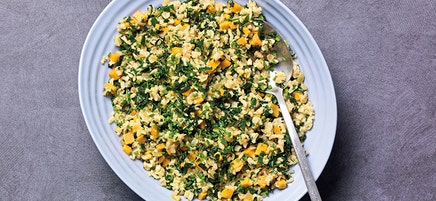
Instant Pot® Brown Rice, Kale & Sweet Potato Pilaf
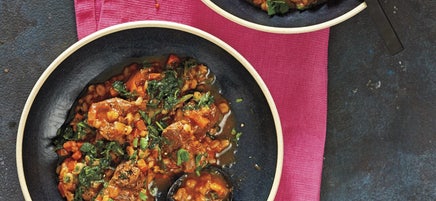
Hearty beef-barley stew
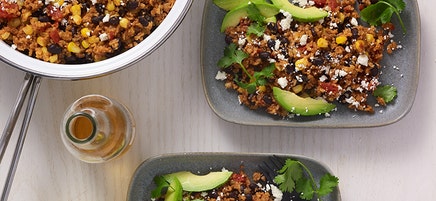
One-Pot Tex-Mex Bulgur

Spring chicken soup with veggies and quinoa
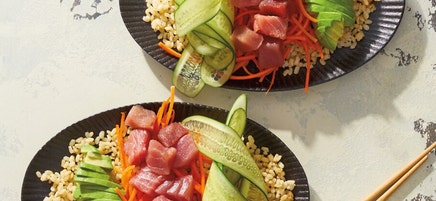
Tuna Sushi Rice Bowls

Millet tabbouleh
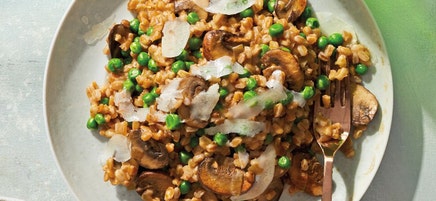
Instant Pot® Farro Risotto with Mushrooms & Peas
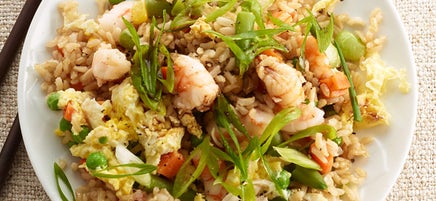
Quick Shrimp Fried Rice
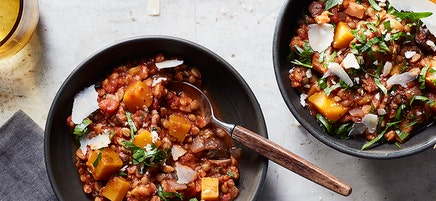
Slow cooker winter vegetable & farro stew