Arugula: Health Benefits and Nutrition
It’s tangy, peppery, and a great way to spice up your salads, but is it as nutritious as other leafy greens? Read on to find out the health benefits and nutrition of arugula.

In this article:
- 1/ What is arugula?
- 2/ 5 health benefits of arugula
- 3/ 1. May reduce cancer risk
- 4/ 2. Boosts heart health
- 5/ 3. Helps prevent osteoporosis
- 6/ 4. May reduce the risk of diabetes
- 7/ 5. May improve athletic performance
- 8/ Arugula nutrition
- 9/ Recipes: Incorporating arugula into your diet
- 10/ Breakfast
- 11/ Salads
- 12/ Entrées
- 13/ Side dishes
- 14/ Arugula and weight loss
- 15/ Potential side effects and risks of arugula
- 16/ The upshot: Is it time to spice things up with arugula?
Long gone are the days of iceberg lettuce salads: Leafy greens have cemented their place on nearly every menu. Whilekalehas gotten the most attention, arugula also deserves a place on your plate. A staple in Mediterranean diets, arugula is one of the most flavorful leafy greens and is linked to a number of health benefits. Here’s everything you need to know to start appreciating—and enjoying—arugula.
Here’s everything you need to know to start appreciating—and enjoying—arugula.
What is arugula?
Arugulais a leafy, dark-green vegetable. It’s part of the Brassica or cruciferous group, which also includes kale, broccoli, cauliflower, cabbage, and Brussels sprouts, explains Brigitte Zeitlin, MPH, RD, and owner of BZ Nutrition. Arugula’s thin leaves look delicate, but they have a strong, peppery taste.
At the grocery store, you’ll find arugula near herbs and other leafy greens, either in bunches or in a clamshell container. It's also often included in mixedsaladblends. On a restaurant menu, arugula is sometimes listed as garden rocket, rocket, or roquette.
5 health benefits of arugula
Cruciferous veggies are linked to several body-boosting benefits, but simply adding a handful of arugula to a dinner won’t necessarily make a significant difference. To improve your health, try incorporating more produce overall to create a healthy diet.
1. May reduce cancer risk
People who eat diets rich in produce have a lower risk of many cancers, according to a research review published in theInternational Journal of Epidemiology. Veggies like arugula may be especially beneficial: “Cruciferous vegetables contain glucosinolates, compounds that play a role in protecting against certain cancers,” says Rahaf Al Bochi, RDN, LD, a spokesperson for theAcademy of Nutrition and Dietetics. Manystudieshave confirmed a link between cruciferous veggies and a lower cancer risk, but more research is needed to determine if the benefits are truly unique to these particular vegetables.
2. Boosts heart health
Including more fruits and vegetables in your diet helps lower your risk of cardiovascular disease—and green leafy vegetables are the most protective of heart health, according to a study published in theAnnals of Internal Medicine. That’s thanks in part to their high levels offolate, a B vitamin that helps break down an amino acid in the blood that increases the risk of heart disease and stroke.
3. Helps prevent osteoporosis
TheNational Osteoporosis Foundationrecommends eating a diet rich in fruits and vegetables—and arugula is a wise pick to include. “Arugula is a good source of vitamin K, which helps build and maintain strong, healthy bones,” Zeitlin says. After all, low vitamin K intake is associated with low bone mineral density in women, according to a study published inThe American Journal of Clinical Nutrition.
4. May reduce the risk of diabetes
More than 34 million Americans are living with diabetes and an estimated 88 million haveprediabetes, according to theCenters for Disease Control and Prevention. But eating leafy green vegetables, like arugula, significantly lowers your risk of type-2 diabetes, according to ameta-analysispublished inThe British Medical Journal.
5. May improve athletic performance
While all vegetables contain dietary nitrate,arugulahas one of the highest concentrations. Nitrates are compounds that help lower resting blood pressure and boost oxygen levels, which may improve exercise performance, according torecent research. (The studies on the link between nitrates and performance involved supplements—future research will need to determine if food-derived nitrate is just as effective.)
Arugula nutrition
Arugula is nutrient-dense, meaning it delivers a number of key nutrients in few calories. Aone-cup servingis only 5 calories and contains the following:
Recipes: Incorporating arugula into your diet
Leafy greens are super-versatile—and this one is no exception. Arugula has a peppery taste, so it pairs well with sweet and tangy foods, like watermelon and feta, says Leslie Fink, RD, nutritionist and recipe editor at WeightWatchers®. Want less bite? Look for baby arugula, as mature leaves have a more bitter taste.
Whether you enjoy it cooked or raw, this green is easy to incorporate into your daily meals. Check out these 23 delicious arugula recipes for ideas:
Breakfast






Salads


Italian arugula salad


White Bean, Roasted Pepper & Arugula Salad


Arugula, peach, and goat cheese salad


Arugula, grapefruit & Parmesan salad
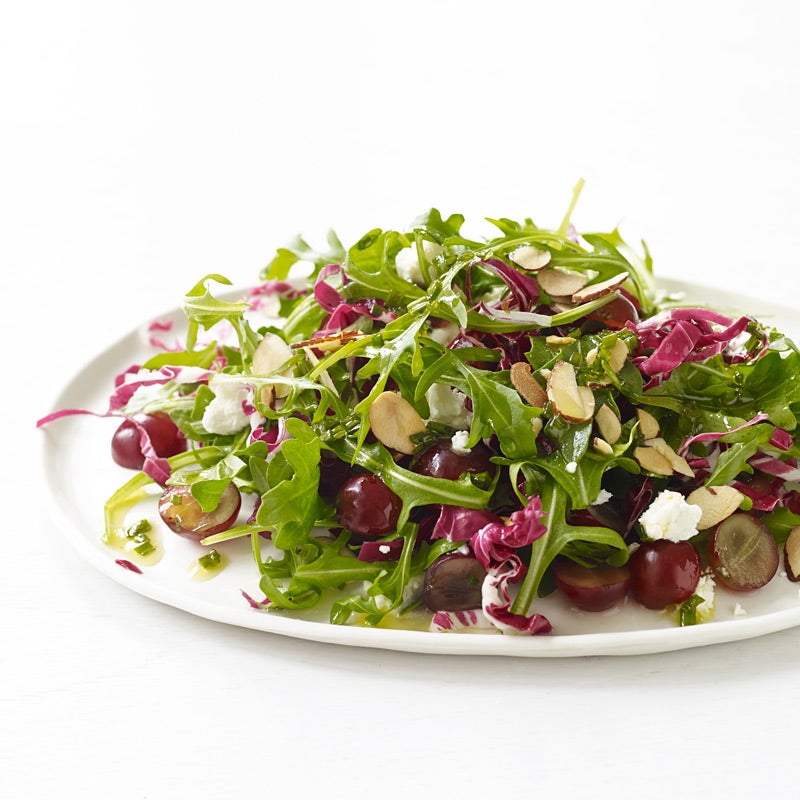

Arugula and radicchio with grapes, goat cheese, and Champagne vinaigrette


Fennel & roasted pepper salad with arugula & parmesan


Orange, beet, and arugula salad
Entrées


Cheese and Herb Stuffed Zucchini with Arugula Salad


Gemelli with tomatoes, limas, and arugula pesto


Tagliatelle with Arugula and Lemon Cream


Fusilli with Delicata Squash, Blue Cheese & Arugula


Parma-wrapped fillet of sole with arugula


Spicy white bean, caponata, and arugula pizzas


Open-Faced Egg Salad Sandwiches


Mediterranean lemon, vegetable, and two-cheese flatbreads
Side dishes







Arugula and weight loss
There’s no miracle food when it comes toweight loss, but eating morefruits and vegetableslike arugula can help. The green veggie is low in calories for its volume (just 5 per one-cup serving), delivering a lot of flavor and nutrients in an all-you-can-eat package.
Potential side effects and risks of arugula
Health experts usually urge people to eat more vegetables. But if you have hypothyroidism, you may have heard you should avoid cruciferous ones. That’s because veggies like arugula affect how your thyroid absorbs iodine, a mineral it needs to produce several hormones. However, you would need to eat far more than a typical serving of arugula for this to be an issue.
Arugula is also high in vitamin K, which in addition to boosting bone health is important for blood clotting. People on blood-thinning medication need to keep their intake of this nutrient consistent, so some avoid leafy greens for fear of a spike. Again though, quantity is key: You’d need to eat five or six cups of arugula to approach the daily 90 to 120 mcg of vitamin K that’s typicallyrecommendedfor adults.
The bottom line: The benefits of eating more greens like arugula far outweigh the risks. But if you have a health condition, you should always discuss any dietary changes with your doctor.
The upshot: Is it time to spice things up with arugula?
Experimenting with new fruits and vegetables is half the fun of eating more healthfully! Arugula contains valuable nutrients and adds a unique flavor to many dishes. Not a fan of the peppery taste? Mix it up: “Buy a leafy greensalad mixthat includes arugula, plus other greens like spinach,” recommends Julie Andrews, MS, RDN, CD, FAND, founder ofThe Gourmet RD. “You’ll get the spicy notes of the arugula, without it being too overpowering.”
--
Nicole Saporitais a senior content manager for consumer wellness at WW. A writer, editor, and content strategist based in New York, she specializes in health & wellness, lifestyle, consumer products, and more. Her work has appeared in Good Housekeeping, Prevention, and REDBOOK magazines.
--
This article was reviewed for accuracy in July 2021 byStephanie L. Fitzpatrick, PhD, senior manager for multicultural programs at WW.The WW Science Teamis a dedicated group of experts who ensure all our solutions are rooted in the best possible research.