How to Make Veggies Irresistibly Delicious
Make the most of their flavor potential with these simple cooking tips. Because if it doesn’t taste good, why bother eating it?
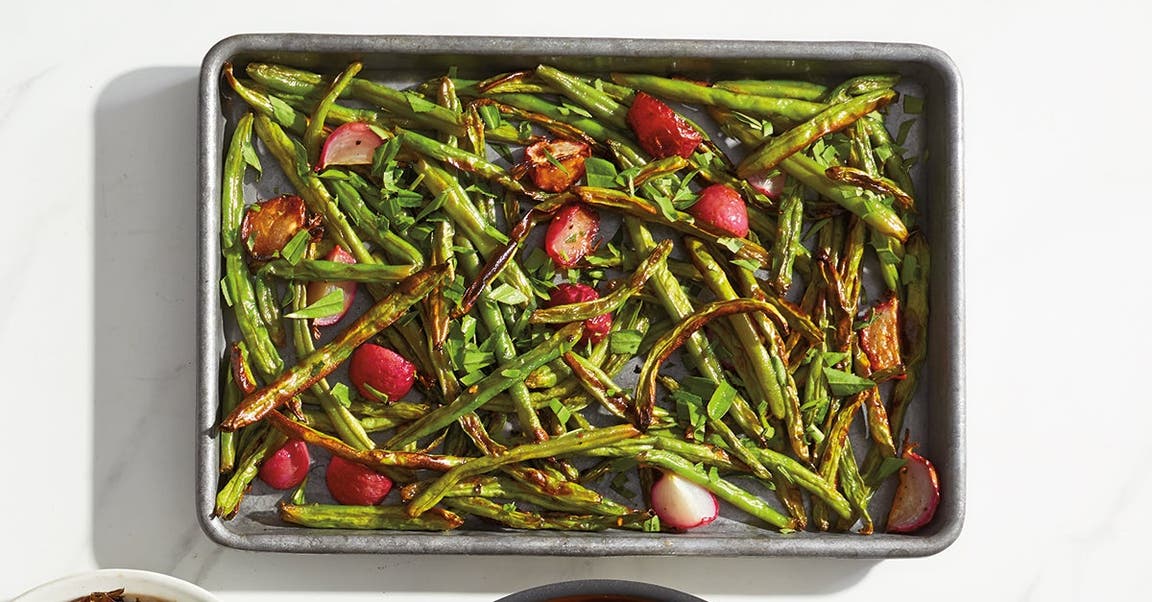
For some people, packing in those veggies is second nature. But for others? The struggle is real. But it doesn’t have to be that way.
Roasting
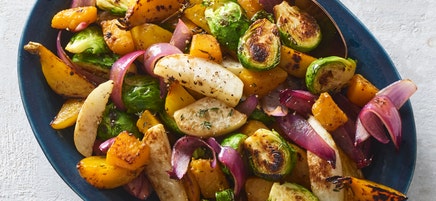
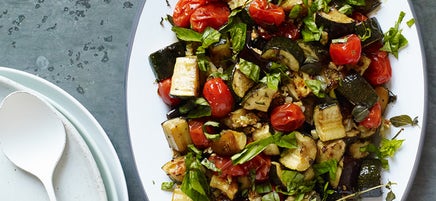
Preheat your oven to 400 to 425°F. This blast of heat is low enough to cook even the most dense veggies on the inside but also high enough to caramelize the outsides.
Use a pan with low sides, like a baking sheet. This allows the hot air in the oven to reach the food and the moisture from the food to evaporate better, leaving behind nicely browned food.
Space the veggies out. If they’re squeezed in too tightly, they’ll just steam and turn out floppy and pale.
Cut the veggies into equal sized pieces. This'll ensure they all cook at the same rate.
Air-Frying
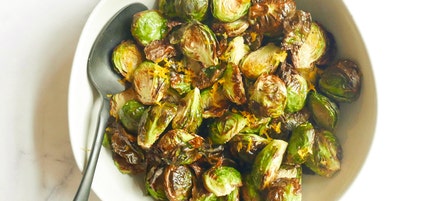
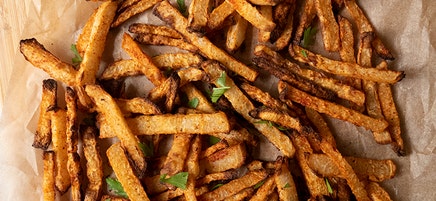
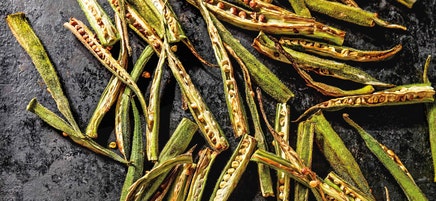
[{"type":"blockquote","children":[{"type":"p","children":[{"text":"How does one fry using air, you ask? The basic principle behind it is that instead of hot bubbling oil circulating around food like in traditional frying, hot air circulates around said food to achieve a crispy, crunchy texture. "}],"typog":"bodycopyExtraLarge"}]}]
Preheat the air fryer. Starting the veggies out at a hotter, steady temp will also get you crispier results and more even cooking.
Don’t crowd the basket. (Space between pieces of food = crispier results.)
Re-crisp formerly crunchy foods. Bring fries that have gone cold and limp back to life!
Shake the fryer. That way the food in the basket browns evenly.
Don’t air-fry anything that’s battered. Or anything that can drip down through the holes in the basket.
Grilling
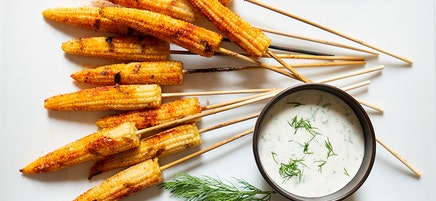
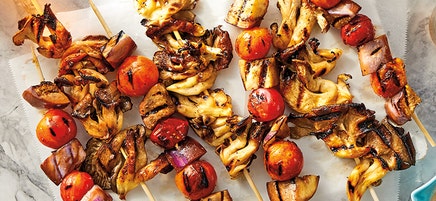
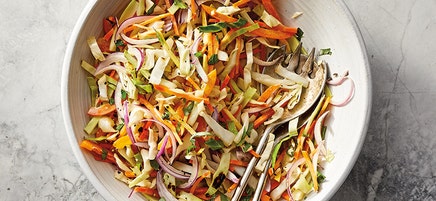
Give your veggies breathing room. That way the intense heat can get around them and you don’t wind up steaming your vegetables.
Consider how hard the veg is. If it’s one that’s softer or more watery, you’ll want to go fast and furious on a hotter flame (e.g. tomatoes, zucchini). If it’s one that’s a little denser, you’ll want to go with a medium flame to give it time to cook through to the center without completely scorching the outside (e.g. eggplant, cauliflower, carrots).
Resist the temptation to mix the veggies on a skewer. Instead, put the same veggies together. Although the rainbow look is gorgeous, many of the veggies won’t cook at the same rate, so you’ll wind up with undercooked onions and burnt up tomatoes.
Stir-Frying
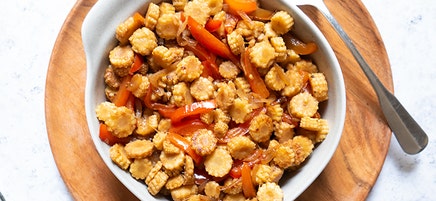
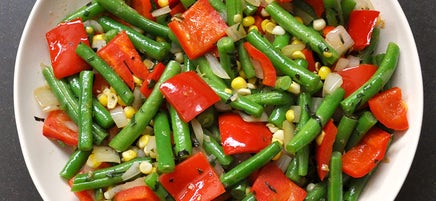
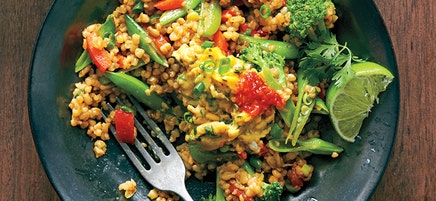
Use relatively high heat. This'll coax the most flavor out of the veggies.
Keep the veggies moving. Because of the high heat, you’ll want to stir constantly so they'll cook evenly and don’t scorch or burn.
No wok? No problem. A 12- or 14-inch skillet will work too. Just don’t be tempted to use a big pot. The high sides will prevent the water from evaporating as the veggies cook, resulting in a steamy, wet pile.
Add the veggies from hardest to most delicate. For example, you’ll want to get broccoli in there first, but leave the baby spinach for the end.
Not sure what can go into a stir-fry? Some of our fave non-starchy veggies to toss into the pan are baby corn, bamboo shoots, broccoli, cabbage, carrots, ginger, kale, jicama, slaw mix, and water chestnuts.
Marinating
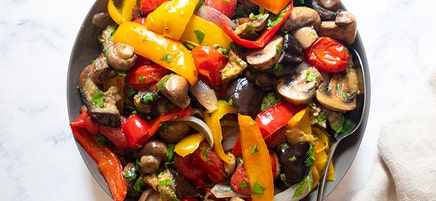
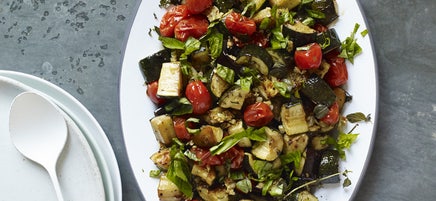
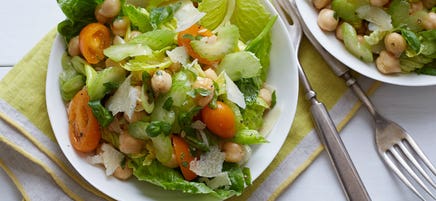
For the marinade, lean on ingredients that have zero Points. Like vinegars, citrus juices, herbs (dried or fresh), garlic (powdered or minced), and spices.
Make sure the veggies are well coated. Let the marinated veggies sit at room temperature for at least 1 hour or cover and refrigerate them for up to 3 or 4 days.
Our fave vegetables to marinate: Tomatoes, cucumbers, zucchini, jicama, kohlrabi, celery, fennel, and artichoke hearts packed in water.
Grill or roast these, then marinate: E ggplants, mushrooms, beets, bell peppers, cauliflower, or green beans. Cooking them first makes them more tender and “absorbent” so they suck up all the flavors.