5 bodyweight moves to help you break a sweat when you skip the gym
Get stronger with these simple and effective moves you can easily practice at home.
As part of the WeightWatchers® community, you already have the information and tools you need to make healthy decisions about the food you eat. The good news is that working out can be just as simple—the secret sauce is body weight exercises.
Benefits of Bodyweight Exercises
“Body weight exercises are a great way to add strength training to any fitness routine, whether you are just starting out or more advanced,” explains Amber Rees, a certified trainer and co-creator of the Brave Body Project. “Focusing on strength moves, in addition to regular cardio training, will help you build muscle, reduce your risk for diabetes, improve your overall mood, and help you burn calories more efficiently.”
Body weight workouts are also instrumental to improving bone health. “Weak muscles can contribute to instability and a higher risk of injury. When you strengthen the muscles in your body, and especially those surrounding your joints, it can relieve pain and improve your overall stability,” the certified trainer adds. The National Osteoporosis Foundation also notes the importance of weight-baring exercises to help build and maintain bone density.
Rees and her co-creator, certified trainer Lindsey Clayton, share their five essential body weight exercises below, along with modifications for every fitness level. Do all the moves for a full-body strength and cardio workout that you can do without signing up for a gym membership.
The Best Bodyweight Exercises
#1: Squat
The benefits: Works your lower core and lower body
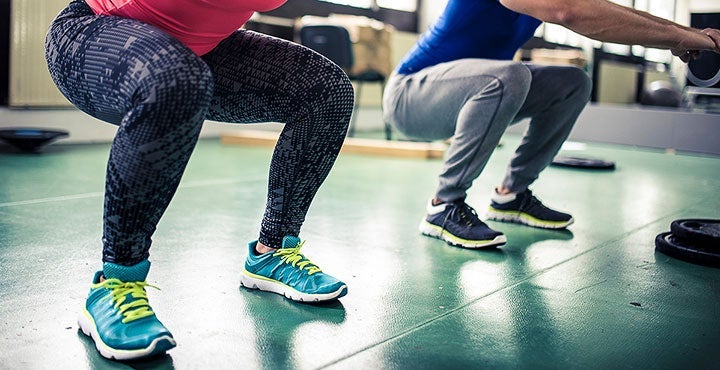
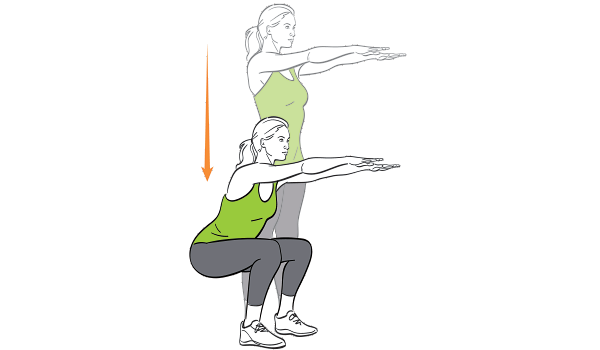
How to do a squat: Start standing tall with a chair or an exercise bench behind you. Feet should be lined up below hips, with toes pointing out slightly. Push hips back and bend knees to lower butt until it touches the chair. Make sure chest stays lifted. Push through heels to return to standing. Try to do 2 sets of 12 reps.
When that gets easy: Ditch the bench and aim to get low! Try to bring thighs parallel to the floor without allowing the knees to push too far over your toes.
Still too easy? Pause for a count of three at the bottom of the squat before you return to standing tall.
#2: Burpee
The benefit: Improves your total body conditioning through this cardiovascular and strength move
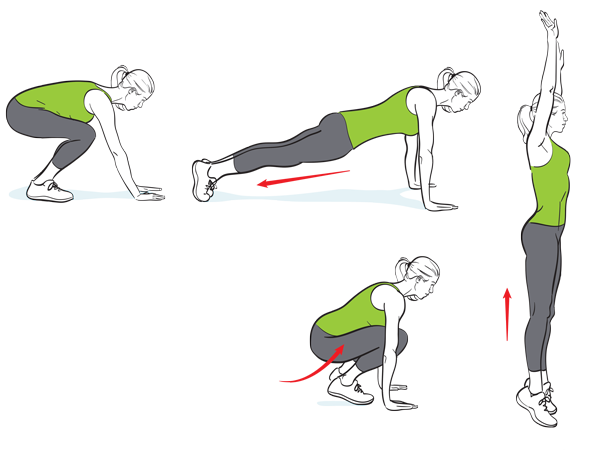
How to do a burpee: Start standing. Bend knees and place palms on floor. Step or hop feet back until you’re in a plank push-up position. Pause for one second, then step or hop feet next to hands and stand up. Try to do 2 sets of 6 reps.
When that gets easy: Add a jump when you stand up.
Still too easy? Add a push-up while you’re in plank position (drop to your knees if needed), and keep the jump when you stand up.
#4: Dips
The benefits: Strengthens your triceps and shoulders
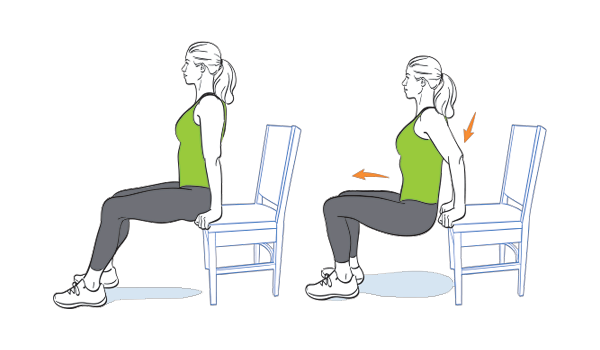
How to do dips: Sit on the floor, with knees bent and feet flat on floor. Place hands behind body, with palms on ground, fingers facing toward butt. Lift hips a few inches off ground. Bend elbows to lower body toward ground. Make sure elbows are pointing directly behind body, not flaring out to sides. Straighten arms to press back up. Try to do 2 sets of 12 reps.
When that gets easy: Use a sturdy bench or chair! Place hands on the raised surface instead of the floor. This will help you move through a deeper range of motion. Aim to bend your elbows until they create 90-degree angles, and make sure your back stays close to the bench.
Still too easy? Continue using the bench, but extend your legs in front of the body instead of keeping feet planted on the floor.