Why I still needed a GLP-1 after gastric bypass surgery
Some people think a gastric bypass “solves” obesity — and if it doesn’t, you’ve failed. But I’m one of many who had the surgery and still use a GLP-1 to manage my weight.
)
My story starts out familiar: I’ve struggled with extra weight and obesity ever since I was seven years old, when my mom took me to see a dietitian for the first time. From then on, I tried every new half-sensible diet and exercise class. It felt like my life revolved around the pursuit of weight loss — even at work. As the diet editor for a national women’s magazine, my weight between 225 and 245 pounds, I wrote a story about weight-loss surgery. The procedure intrigued me, but I shelved the idea. I still believed I just hadn’t tried hard enough, that I wasn’t disciplined enough, or that I hadn’t exhausted all my options.
Over the next decade, I lost and regained over 120 pounds. Not all at once: 20 pounds here, 10 pounds there. When I dropped 56 pounds after doing a 13-week medically supervised liquid diet, it was the first time I’d weighed less than 200 pounds in my adult life. But after every attempt, I always regained the weight I lost, plus more.
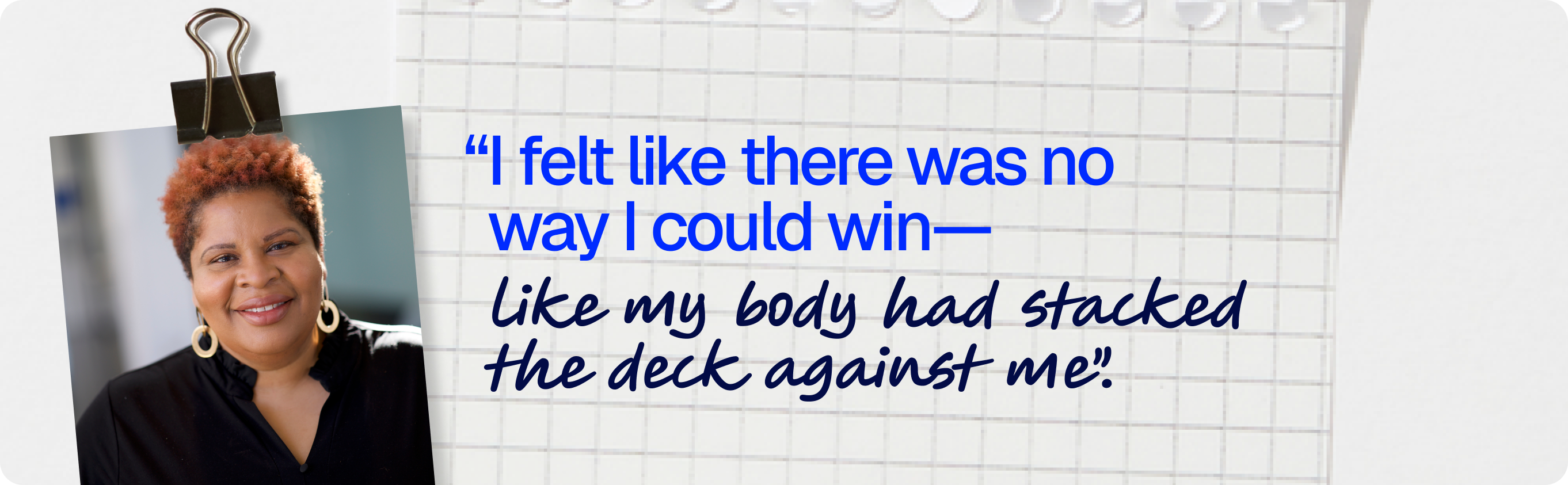
Eventually, I weighed more than 300 pounds, and my BMI was almost at 54. My back pain was so bad, I could barely walk a quarter of a mile. My primary care physician diagnosed me with type 2 diabetes. Shortly after that, she also diagnosed me with polyendocrine metabolic ovarian syndrome, formerly known as polycystic ovary syndrome (PCOS). PMOS is a hormonal disorder that has long-term, serious health effects. As many as 70% of women with PCOS also experience insulin resistance, which is closely related to obesity and can lead to type 2 diabetes. I felt like there was no way I could win — like my body had stacked the deck against me.
I could’ve used a GLP-1 and not considered surgery, as many people are doing these days. Surgeons at Cedars-Sinai Medical Center in Los Angeles report a 20-30% drop in bariatric surgeries since GLP-1s became popular obesity treatments. It’s not hard to understand why people would rather try medication before surgery. Having your stomach and intestines altered is a major procedure and life change.
Ultimately, I chose a mini gastric bypass — a procedure that creates a 6-ounce tube out of the top of your stomach, then bypasses several feet of your small intestine before reconnecting the new small stomach tube. These changes mean you eat less food and absorb fewer calories and nutrients, and it changes the hormones that influence your appetite and satiety. The mini is a newer procedure, different from the traditional roux-en-y gastric bypass. Instead of a pouch, the mini creates a sleeve-shaped stomach. And instead of connecting your intestines at two points, the mini uses only one connection point. It takes less operating time, and data suggests it’s safer. Some research also shows the mini gastric bypass is better than the traditional bypass for weight loss and treating health conditions like type 2 diabetes. But regardless of the procedure, any sort of bariatric surgery is expensive and extreme. The gastric sleeve, for example, permanently removes 80% of a person’s stomach, so providers tend to only recommend it when other treatments aren’t working.
That’s what had happened to me. I had tried different medications before. Alone, they weren’t enough to bring my weight down to a healthy point, and when I quit them, I regained. My obesity medicine specialist recommended combining surgery and medication, that I have a mini gastric bypass and then plan to start a GLP-1 a few months later. Wait, what? Go through a body-altering surgery and still need prescription medication for the rest of my life to manage my weight? Like many people, I thought of a gastric sleeve or gastric bypass as the ultimate “cure” for obesity.
The thing is, surgery isn’t a cure. Sometimes people who have surgery don’t lose all the weight they need to, or they lose weight and then regain it. We know that obesity is a chronic disease that is both progressive and relapsing. It has multiple causes, including genetics, hormones and brain chemistry, nutrition, poor sleep, other diseases (like PMOS in my case), and environmental factors, according to the Obesity Medicine Association. It gets worse over time without treatment. Because obesity is so complex and has no cure, managing it successfully often requires more than a simple, singular answer.
“More and more frequently, we're looking at combination therapy,” says Dr. Jessica Bartfield, M.D., associate professor of bariatric and weight management surgery, and a physician at Atrium Health Wake Forest Baptist Multidisciplinary Weight Management Center, where bariatric surgeons and obesity medicine specialists work together to treat patients. “One analogy you could look at is cancer treatments. Some people may need surgery to treat cancer. Some people may need chemotherapy. Some people need both,” she says.
Science is still sussing out who benefits the most from a surgery and meds combo. Bartfield says some data suggests it’s a good approach for people who have a BMI of 50 or higher and/or multiple weight-related conditions, like type 2 diabetes and sleep apnea, for example. Still, if surgery is so effective, why would anyone need medicine after having it?
“Surgery isn't necessarily curative. It is a strong intervention, but it doesn't prevent the brain and the body from trying to fight back,” says Dr. Rekha Kumar, M.D., M.S., an endocrinologist and board-certified obesity medicine specialist in New York City who has served as the medical director of the American Board of Obesity Medicine.
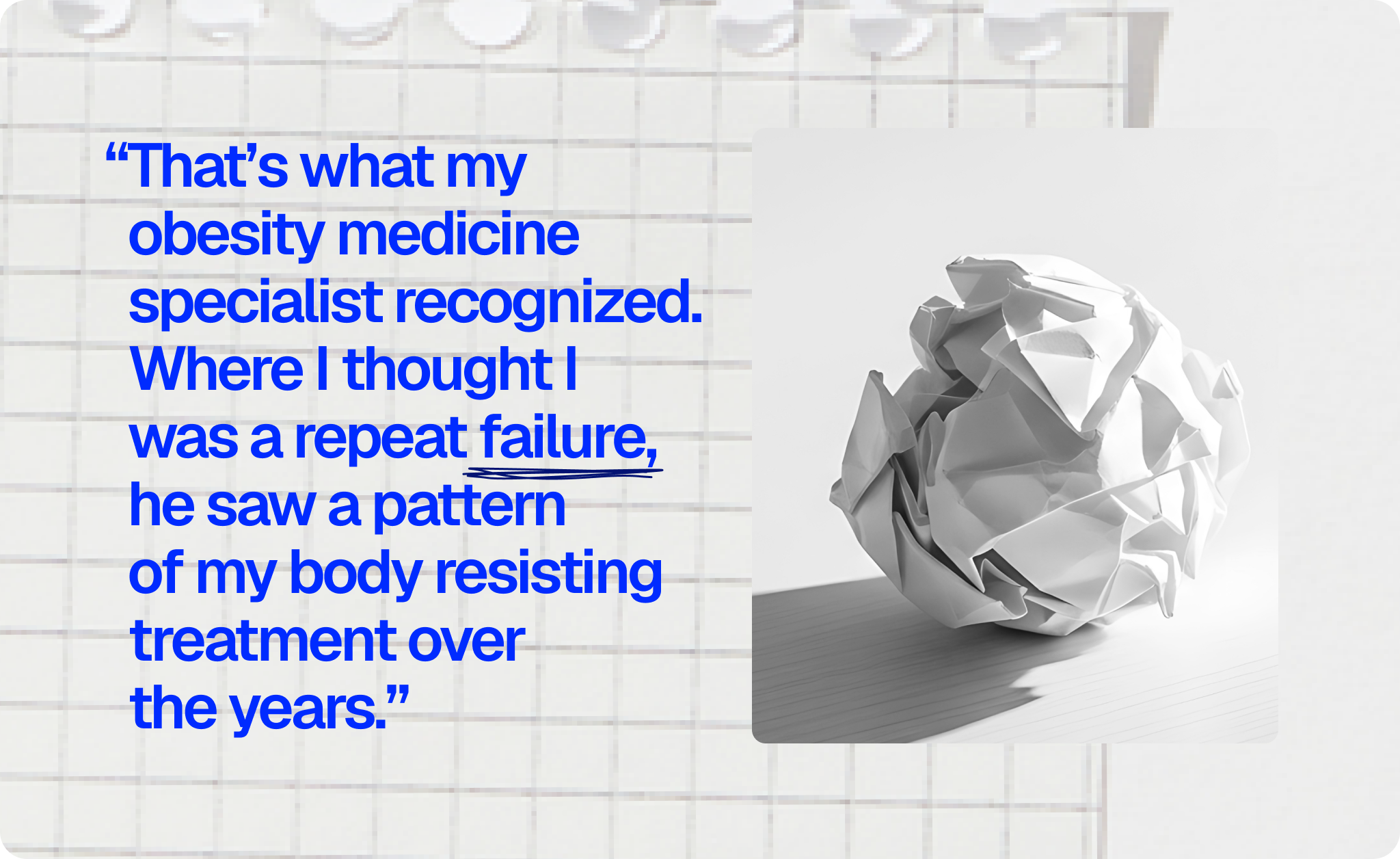
That’s what my obesity medicine specialist recognized. Where I thought I was a repeat failure, he saw a pattern of my body resisting treatment over the years. He’d told me that sometimes the body wouldn’t let people lose weight on their own, and that regaining it wasn’t my fault.
“If you lose weight through nutrition and exercise, through a GLP-1, or a surgical intervention, the brain and the body will try to resist that weight loss,” Kumar says. That resistance is sometimes referred to as the set point theory or metabolic adaptation. “Because the surgical intervention is such a strong and powerful tool, that might not happen until later on. It could be years after surgery, but people will become hungrier, their metabolism slower, and that becomes a setup for weight gain. And this is the same biology that leads people to regain weight after stopping weight-loss medicine.”
Regain among bariatric patients is common. As many as 12% of gastric sleeve patients go back for a second surgical procedure because they didn’t reach their weight goal with the first, or to manage their weight regain.
These are some of the situations Bartfield considers when she recommends combining surgery and medication. “I also tend to consider this strategy for patients with a longer duration of disease, those that have less than expected treatment response from surgery, or those experiencing early weight regain or early weight-loss plateaus after surgery,” she says.
So far, there is no established, standardized therapy for using GLP-1s after bariatric surgery to help people achieve their weight goal or maintain. But there are promising signs: One small study on weight-loss surgery patients who regained an average of 15% of their total body weight then took GLP-1s for six months — which helped them lose two-thirds of the weight they’d regained.
With a mini gastric bypass surgery and a GLP-1, I’ve finally reached my goal. I’ve lost 140 pounds — 46% of my total body weight — which took almost two years from the time I had the surgery, and I’ve maintained it for two years so far. I’ve also achieved partial remission of my diabetes.
Now that I know not to think of surgery as a “cure,” I have a different mindset. I see so many people in social media support groups for people who’ve had weight-loss surgery share that they’ve regained some weight. They’re often ashamed to talk with a doctor, and so they ask for advice from other patients. I see people blaming themselves, believing they failed the surgery, and that there’s nothing else left to try. The responses are often a mix of fat-shaming and recommendations for fasting and fad diets. I wish I could share with more people that regaining weight after surgery isn’t a failure, and how a GLP-1 can help.
For me, a GLP-1 helped me stop obsessing about maintaining my weight at a certain number. I know that if I do my part, the medicine will help my body work as it should. My weight might fluctuate within a 5-pound range, but I don’t see the wild gains I used to. Now, I think about managing my health through resistance training, healthy foods, and sticking to a strict sleep schedule. Even though I’ve had surgery, I’m cool with taking medication for life — because I have my life back.