How much does Zepbound cost?
While the list price may be high, there are many ways to save money. Here’s what experts recommend to bring down the cost of this GLP-1.
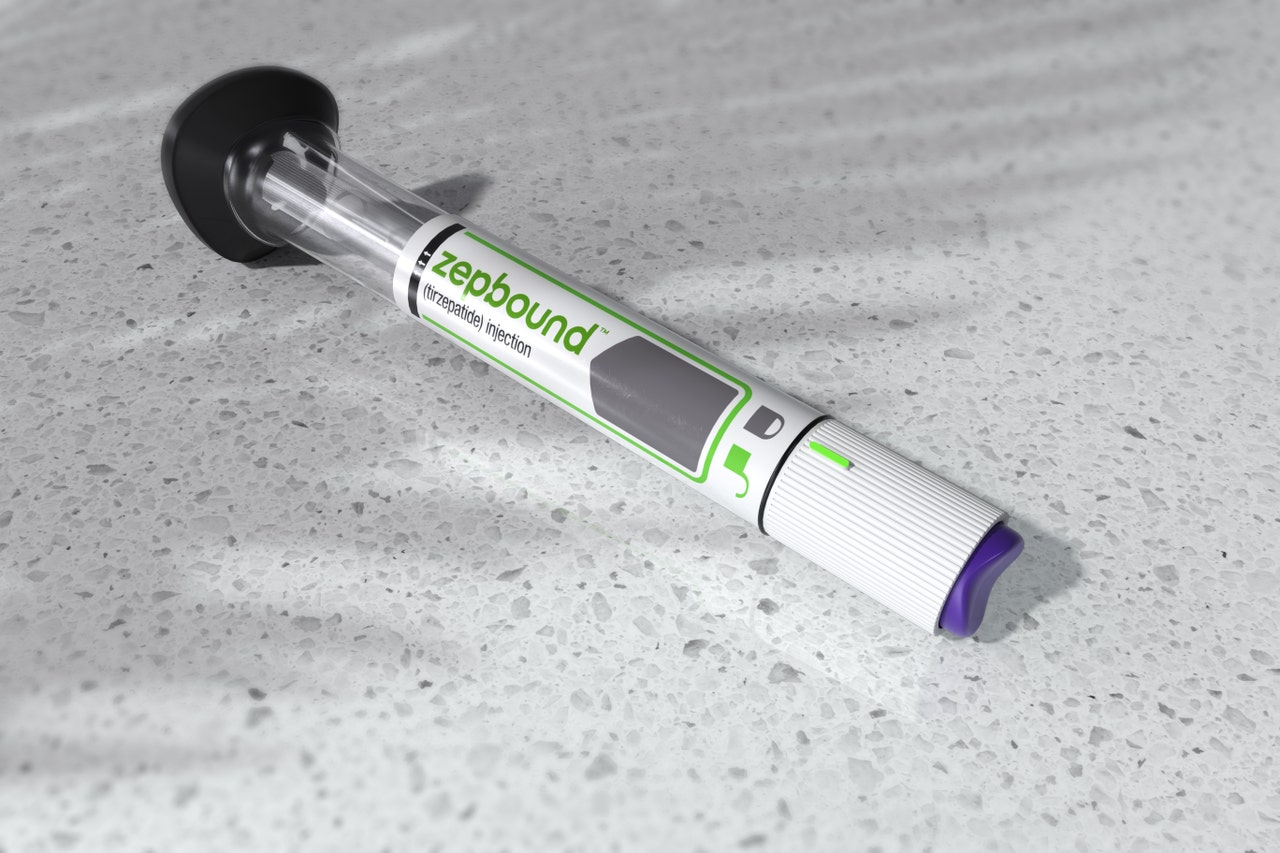
Injectable GLP-1 agonist medications can be expensive if they aren’t covered by insurance, and Zepbound is no exception. But don’t just assume there’s no way you can afford it. There are ways to bring down how much Zepbound costs — with insurance or without. Here’s what you should know.
How much is Zepbound without insurance?
According to Eli Lilly and Company, the company that manufactures Zepbound (tirzepatide), the current retail list price is $1,086.37 per month for the single-use injector pen if paying out of pocket. Most patients, however, will not actually pay the full list price. Actual cost may vary based on your pharmacy, whether or not you qualify for discounts, or if you can participate in any savings programs. This is around the same as other injectable GLP-1 weight-loss medications, like Wegovy (semaglutide) and Saxenda (liraglutide).
A less expensive option is to request that your prescriber order you vials (where you use a syringe to draw the medication out of a single-use vial) or the new KwikPen, a multi-dose monthly injection pen. That means that one KwikPen has all four doses that you need for the month; it comes in the same dose strengths as the original single-use injector pen. Unlike the vial or single-use injector pen, you do not need a new device every week.
Regular price for a 1-month supply of Zepbound single-dose vial or KwikPen is $299 for 2.5 mg, $399 for 5 mg, $499 for 7.5 mg, $699 for 10 mg, $699 for 12.5 mg, and $699 for 15 mg. As of February 23, 2026, the manufacturer has a promotion for the Zepbound Self Pay Journey Program, which lowers rates to $449 for each 1-month supply of the 7.5 mg, 10 mg, 12.5 mg, and 15 mg Zepbound single-dose vial or Zepbound KwikPen for single-patient-use.
How much is Zepbound with insurance?
The figure will be different for everyone, as all insurance plans vary in regards to coverage, deductibles, and copayments. But insurance coverage will likely bring down the cost of Zepbound significantly. “With insurance [coverage], you can definitely get it for reasonable amounts,” says Dr. Supriya Rao, M.D., a board-certified physician in internal medicine, gastroenterology, obesity medicine, and lifestyle medicine in Boston. “I have patients who get it for $50 a month.”
Does insurance cover Zepbound?
That’s a little tricky: Some insurance plans cover Zepbound and other GLP-1 weight-loss medications, but many do not; some delivery systems of Zepbound (such as the KwikPen) are cash pay only, while others like the original pens may be covered. A 2025 survey by the health-policy research firm KFF found that amont companies that offer health benefits and have 5,000 or more workers, the number covering GLP-1s for weight loss increased significantly from 2024, rising from 28% to 43%, though the majority of employer-based health insurances don't cover GLP-1s for weight loss.
GLP-1 medications that are FDA-approved to treat type 2 diabetes — Ozempic (semaglutide), Mounjaro (tirzepatide), and Trulicity (dulaglutide) — are more often covered by insurance than those that are indicated specifically for weight loss. “If somebody only has overweight or obesity without diabetes, approval for the weight-loss brands — Zepbound or Wegovy — can be very hit or miss, depending on what type of plan the patient has,” says Dr. Michael Glickman, M.D., a board-certified physician in obesity, family and lifestyle medicine, and the founder of Revolution Medicine, Health & Fitness in Washington, D.C.
But this all may change in the not-too-distant future as the medications are approved for more and more health conditions. “For example, Zepbound was recently approved for sleep apnea,” says Glickman. So over time, as we see more approvals being added to the labels of these drugs, I think there's a good chance that the insurance companies will have to offer coverage for these other indications.”
Does Medicaid cover Zepbound?
It varies from state to state. As of January 2026 Medicaid programs in 13 states covered GLP-1 drugs for obesity. You can find more information about your state’s Medicaid coverage on the Zepbound website.
Does Medicare cover Zepbound?
Medicare Part D plans, which is the add-on prescription drug coverage available through the federal health insurance program, do not currently cover Zepbound or other weight-loss medications (they do cover the GLP-1s approved for type 2 diabetes and cardiovascular disease, however). In November 2025, however, President Trump announced that Zepbound and other GLP-1s would be covered by Medicare starting as early as April 2026.
How to save on Zepbound without insurance
There are ways to save money on Zepbound if you don’t have insurance or if your insurance plan doesn’t cover your Zepbound prescription. For instance, the LillyDirect self-pay option allows you to buy Zepbound directly from the manufacturer for a reduced price (starting at $299). An important note: This form of Zepbound is dispensed in single-dose vials or the new KwikPen. Here are some other ways to save:
Telehealth prescription services
A telehealth visit with a licensed provider who can prescribe Zepbound (if you’re medically eligible) — like those through Weight Watchers— may be able to help you save some money on your prescription. The telehealth visits tend to cost less than going to a doctor on your own without insurance and your Weight Watchers membership can connect you to an Insurance Coordinator, who will help you figure out whether Zepbound is covered by your plan and what other cost-saving options are available to you.
Get a 90-day supply
When you first start Zepbound, your provider will likely start you on the lowest dose and then slowly work up to monitor your progress and side effects. Once you’ve reached your maintenance dose, which is the one you will stay on, you may be able to request your provider write a prescription for a 90-day supply. This can be more cost-effective than refilling it one month at a time — and will save you trips to the pharmacy.
Zepbound savings card
The Zepbound Savings Card is available to U.S. residents ages 18 and older who’ve been prescribed Zepbound for weight loss and are insured but can’t get covered under their prescription plan. With the Savings Card, people can pay as little as $25 for a one-, two-, or three-month prescription of Zepbound. The Savings Card can be used for up to 13 Zepbound prescriptions in one calendar year.
Here are the eligibility criteria:
You are enrolled in a commercial drug insurance plan;
You are not enrolled in any state, federal, or government funded healthcare program, including, without limitation, Medicaid, Medicare, Medicare Part D, Medicare Advantage, Medigap, DoD, VA, TRICARE®/CHAMPUS, or any state prescription drug assistance program.
Are there cheaper alternatives to Zepbound?
Other GLP-1 medications are FDA-approved to treat obesity. While some cost about the same as Zepbound, there are others with a much lower price.
GLP-1 drugs
The list price of Saxenda (liraglutide), another FDA-approved GLP-1 weight-loss medication, is actually slightly higher than Zepbound’s price, but liraglutide is now available as a generic, unlike other GLP-1 medications, which can be much less expensive than brand-name Saxenda. Talk to your provider about whether the generic liraglutide is appropriate for you. Wegovy (semaglutide) recently lowered its prices considerably, for a limited time; find out more about Wegovy’s costs.
Non-GLP-1 alternatives
Going the non-GLP-1 route for weight-loss medications will likely save you money. Many of these medications have been on the market for a long time and come in generic form, Rao explains. Plus, they are usually taken as a pill. “Orals tend to be much cheaper than injectables.”
Qsymia (phentermine/topiramate) and Contrave (bupropion-naltrexone) — or their generic counterparts — are two options. Phentermine can also be prescribed by itself for weight loss.
Metformin is an inexpensive medication that is FDA-approved to manage high blood sugar levels in type 2 diabetes patients, but it may also “give some mild amount of weight loss,” Rao says. “It’s most helpful for patients with prediabetes and diabetes. I use [it] in some cases, especially in patients who are on antidepressants or antipsychotics. It helps with weight gain associated with those medications.”
The bottom line
Zepbound can be expensive if you don’t have insurance, with a list price of more than $1,000 a month. Zepbound and other GLP-1 agonist medications that are FDA-approved for obesity are less likely to be covered by health insurance plans than GLP-1 drugs that have been approved to treat type 2 diabetes. This means consumers may pay more out of pocket to use Zepbound. The drug’s manufacturer, Eli Lilly and Company, offers savings programs to reduce the price. Non-GLP-1 medications for weight loss are typically much less expensive alternatives.