GLP-1 comparison guide: Ozempic vs Wegovy vs Mounjaro vs Zepbound
Knowing the differences between these medications is important, but can also be confusing. This guide will help.
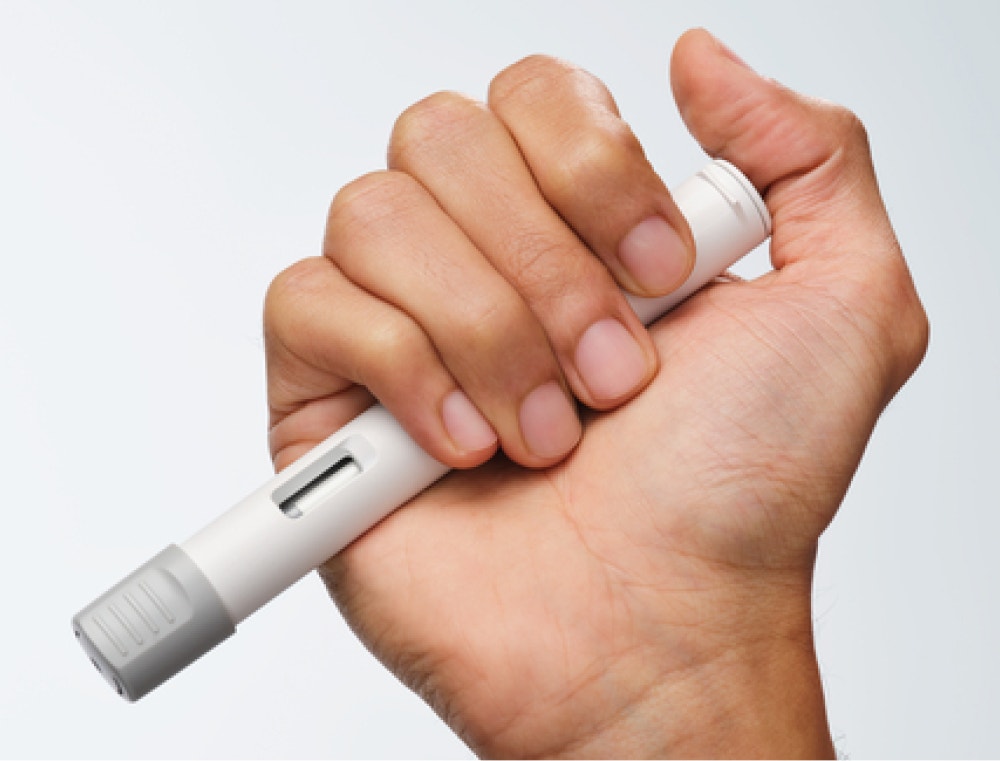
While prescription weight-loss medications in general are nothing new, there is a category of them that is: GLP-1s, or glucagon-like peptide-1 receptor agonists. These medications mimic GLP-1, a naturally occurring hormone, and help you feel full for longer after eating as well as manage your blood sugar.
Within the overall category of GLP-1s, you have multiple options, including semaglutide, with the brand names Wegovy and Ozempic, and tirzepatide, with the brand names Mounjaro and Zepbound. What do these medications have in common and how are they different? This guide will compare the different GLP-1 options available to help you understand your choices better.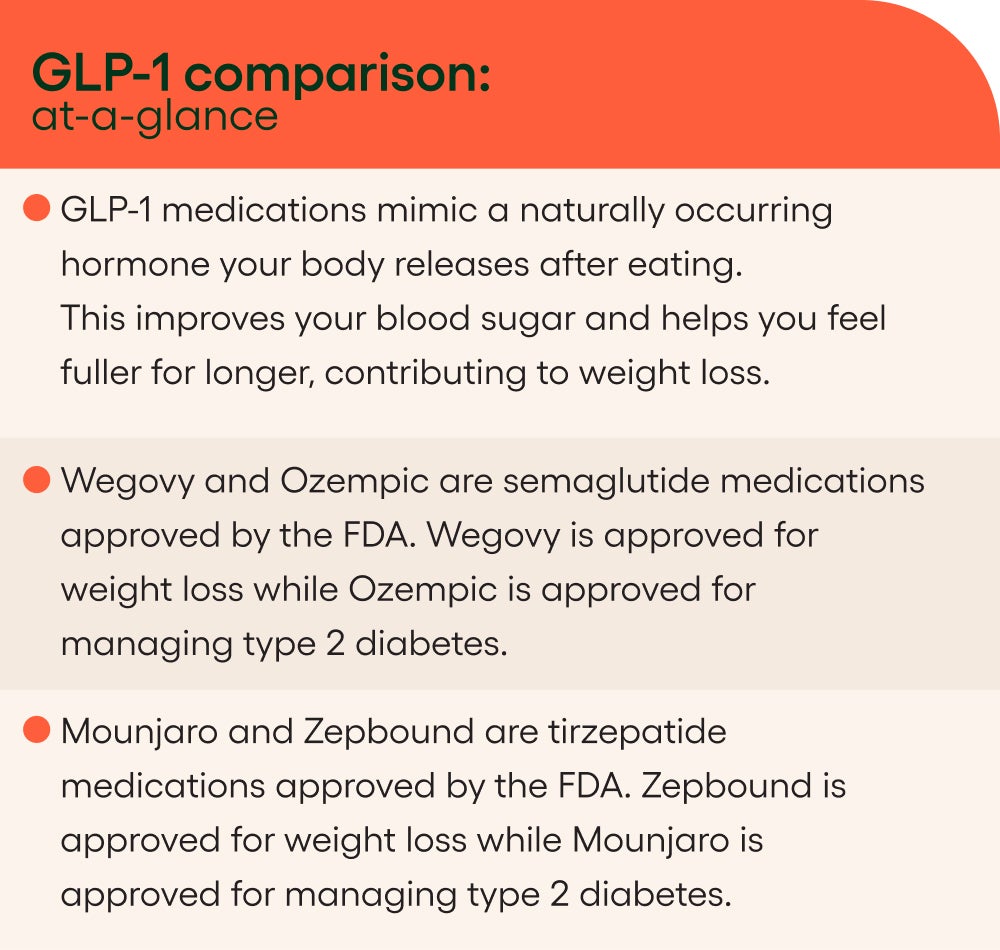
What’s the difference between GLP-1s?
With so many different terms for injectables, it helps to understand the difference between semaglutide and tirzepatide, or Ozempic and Wegovy.
This table compares the active ingredients, FDA-approved usage, and typical weight loss or A1C reduction of some of the most well-known GLP-1s:
Brand (active ingredient) | Type of medication | FDA approved use | Dosing frequency | Impact on health | Form |
|---|---|---|---|---|---|
Ozempic | GLP-1 receptor agonist | Type 2 diabetes management | Once a week | Injectable | |
Wegovy | GLP-1 receptor agonist | Weight loss in people with obesity or overweight and a weight-related condition | Once a week | Injectable | |
Mounjaro | GLP-1 and GIP receptor agonist | Type 2 diabetes | Once a week | Injectable | |
Zepbound | GLP-1 and GIP receptor agonist | Weight loss for people with obesity or overweight and a weight-related condition | Once a week | Injectable |
Semaglutide vs tirzepatide
Semaglutide is the active ingredient found in the injectable medications Ozempic and Wegovy (and the oral medication Rybelsus). It is a GLP-1 receptor agonist, a medication that works by binding to GLP-1 receptors in the body. This increases the release of insulin (in response to glucose) to help keep blood sugar down. It also causes your stomach to empty more slowly than usual so you don’t feel as hungry as quickly, and sends signals to your brain to tell you that you’re full. Originally approved to help manage type 2 diabetes, it has since been approved for weight loss.
Tirzepatide is the active ingredient in the injectable medications Mounjaro and Zepbound. Like semaglutide, it was first approved to help manage type 2 diabetes and then approved for weight loss. Tirzepatide is a GLP-1 receptor agonist too, but it is also a GIP (glucose-dependent insulinotropic polypeptide) receptor agonist. It’s this fact — that tirzepatide mimics two hormones instead of one — that is the main difference between semaglutide and tirzepatide. It does the same actions in the body, helping lower blood sugar and make you less hungry, but its effects are amplified.
What is each GLP-1 option approved for?
Starting any medication is a big decision that requires a lot of thought and consideration. If you’re exploring GLP-1s to improve your health, it’s best to do so with guidance from a qualified healthcare provider, like those at WeightWatchers Clinic. But it also helps to understand your options. Here are the approved uses for the four main GLP-1s:
Mounjaro and Zepbound
These are the two brands of tirzepatide. Mounjaro is approved to help manage type 2 diabetes while Zepbound is approved for weight loss in those with obesity or with overweight and at least one weight-related condition like high cholesterol. Zepbound is also FDA approved for treating moderate-to-severe obstructive sleep apnea in adults with obesity.
Ozempic and Wegovy
These are two of the brand names of semaglutide. Ozempic is approved to help manage type 2 diabetes while Wegovy is approved for weight loss if you have obesity or if you have overweight with a weight-related condition. Wegovy is also approved to reduce the risk of serious cardiovascular events, such as heart attack and stroke, in adults with cardiovascular disease and obesity or overweight. Wegovy recently also gained approval for the treatment of fatty liver disease (technically called metabolic dysfunction-associated steatohepatitis or MASH) in adults with moderate to advanced liver fibrosis.

GLP-1 dosing
Your healthcare professional will be able to advise on the appropriate prescription dose of GLP-1s, whether you’re:
Starting the medication
Building up your dose over time
Pausing the medication
Gradually reducing your dose
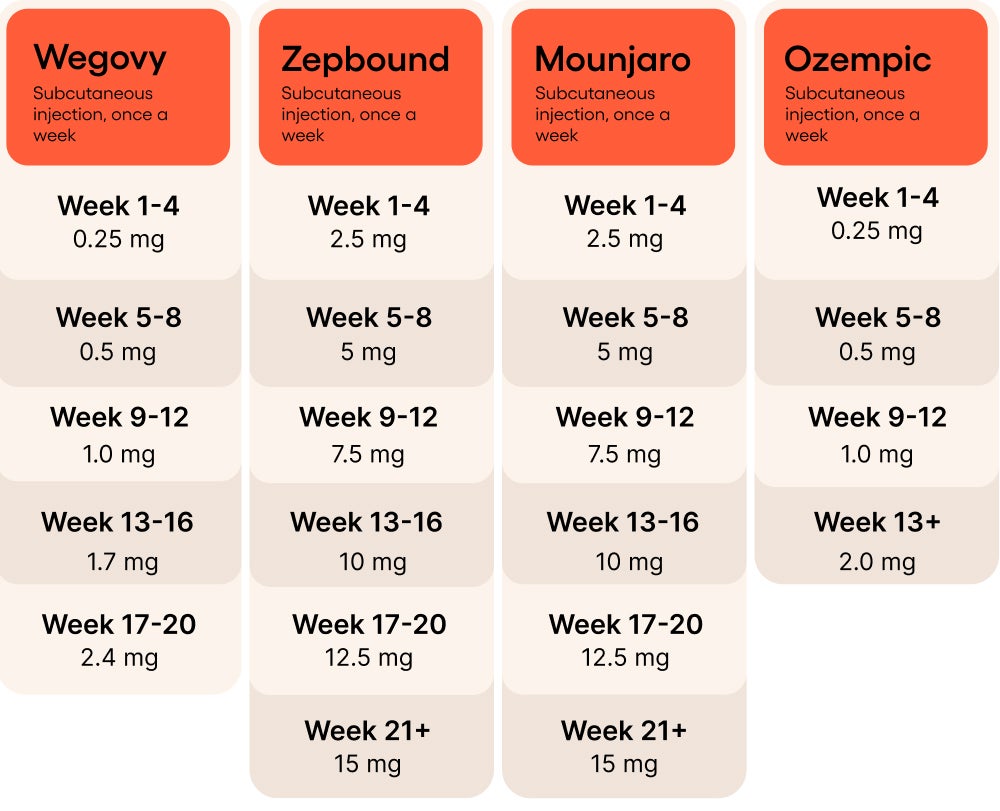
In general, the medications are first prescribed at the lowest dose, gradually increasing the dose over time. See below for a sample tirzepatide vs semaglutide dosage chart:
How effective are GLP-1s?
As with any medication, individual results can vary. But studies have shown that GLP-1s can help you lose weight and improve blood sugar.
Mounjaro (tirzepatide): Patients taking the 15 mg dose lowered their hemoglobin A1C (a way to measure blood sugar over time) by 2.4% in some studies.
Ozempic (semaglutide): Patients taking the 2.0 mg dose can lower their A1C up to 2.1% in some studies.
Zepbound (tirzepatide): Patients on the 15 mg dose lost an average of 21% of their body weight over 72 weeks.
Wegovy (semaglutide): Patients on the 2.4 mg dose lost an average of 15% of their body weight over 68 weeks.
Note that these outcomes were achieved in combination with diet and exercise, underlining the value of a holistic approach to weight loss and blood sugar management.
GLP-1 side effects and safety considerations
As with any medication, you need to be aware of the potential side effects when taking a GLP-1.
These side effects typically occur when you first start taking the medication or after a dose increase.
Tirzepatide vs semaglutide side effects
Tirzepatide and semaglutide have similar side effects, since they work in similar ways in your body. Nausea, vomiting, stomach cramps, bloating, constipation, and diarrhea are the most common, along with fatigue, headaches, and dizziness. For the full list of side effects, look at the package insert that comes with your medication (find those here for Zepbound, Mounjaro, Wegovy, and Ozempic). Following guidance from your healthcare provider and slowly increasing your dose could help to reduce these side effects.
Zepbound vs Wegovy side effects
When comparing the two weight-loss medications, know that the side effects with Wegovy and Zepbound tend to be pretty similar. They include:
Reaction at injection site
Digestive effects (like nausea, vomiting, diarrhea, or constipation)
Dizziness
Fatigue
Hair loss
Change in taste
Some serious side effects may occur in patients taking either of these drugs. These can include:
Digestive issues that could lead to dehydration and cause kidney damage
Gastrointestinal issues like pancreatitis or gallbladder disease
Low blood pressure
Low blood sugar levels
There is also a “black box” warning, the most serious kind from the FDA, on both medications for the risk of a certain rare type of thyroid cancer. While important to know about, this warning is based on animal studies and the link has not been found in humans.
GLP-1s: cost, coverage, and access
Costs for GLP-1 medications like semaglutide and tirzepatide can differ widely, and what you pay will depend on factors such as whether or not you have insurance and if these medications are included in your plan. For instance, some plans only cover GLP-1s if they are prescribed for type 2 diabetes and don’t cover those prescribed for weight loss.
The four most common GLP-1s cost around $1,000 a month if you don’t have insurance or use a savings plan.
There are ways to pay less, such as the direct-to-consumer cash pay options offered by the manufacturers, Lilly Direct and Novo Care. Through those, you could pay between $349 and $499 per month for Zepbound’s vial and syringe and $499 a month for Wegovy in the auto-injector pen.
A WeightWatchers Clinic membership can help to make things a little easier. While GLP-1 medications are not included in the membership and medication costs may vary depending on your insurance, with a WeightWatchers Clinic membership, you will be able to easily compare costs and have an insurance coordinator help check on coverage.
Ready to explore your next step? Take our quick quiz today.
Switching between GLP-1 medications
There are a few reasons why your clinician may suggest switching GLP-1s. You might be experiencing side effects that don’t get better or your insurance might cover one and not another, for example. If you are switching medications, it’s essential to follow your clinician’s advice carefully.
Switching from semaglutide to tirzepatide
Switching from Ozempic to Mounjaro or Wegovy to Zepbound is possible when done under the guidance of a healthcare provider. They will be able to plan your dosage in a way that minimizes side effects during the transition. They’ll likely suggest starting the new medication at a low dose but the approach may be different for everyone depending on factors such as your current dosage, how long you’ve been taking the medication, and why you’re switching in the first place.
GLP-1 tapering and long-term weight management
If you’re taking a GLP-1 for type 2 diabetes, you will likely stay on your maintenance dose unless your doctor recommends otherwise. But those taking a GLP-1 for weight loss may think about reducing their dose or even stopping completely once they reach their goal weight. A few studies suggested that stopping GLP-1s is associated with regaining at least a portion of the lost weight, but it’s possible that if you go slowly, you may be more likely to keep the weight off. Just know this has not yet been evaluated in clinical trials.
Tapering off is when you slowly lower your dose or stretch out your dose frequency. For example, after lowering your dose to the lowest available one, you may go from taking injections weekly, to every other week, then to every three weeks. Changing the frequency of your injections, though, should only be done at the direction of your clinician.
There’s no official guidance from manufacturers on how to taper off a GLP-1, but your clinician will be able to guide you here, setting milestones, creating a schedule, and monitoring your weight. To put yourself in the best position to keep your weight off, focus on healthy eating, with a diet full of lean protein, fruits and vegetables, and an active lifestyle — all lifestyle behaviors that are part of our WeightWatchers Program.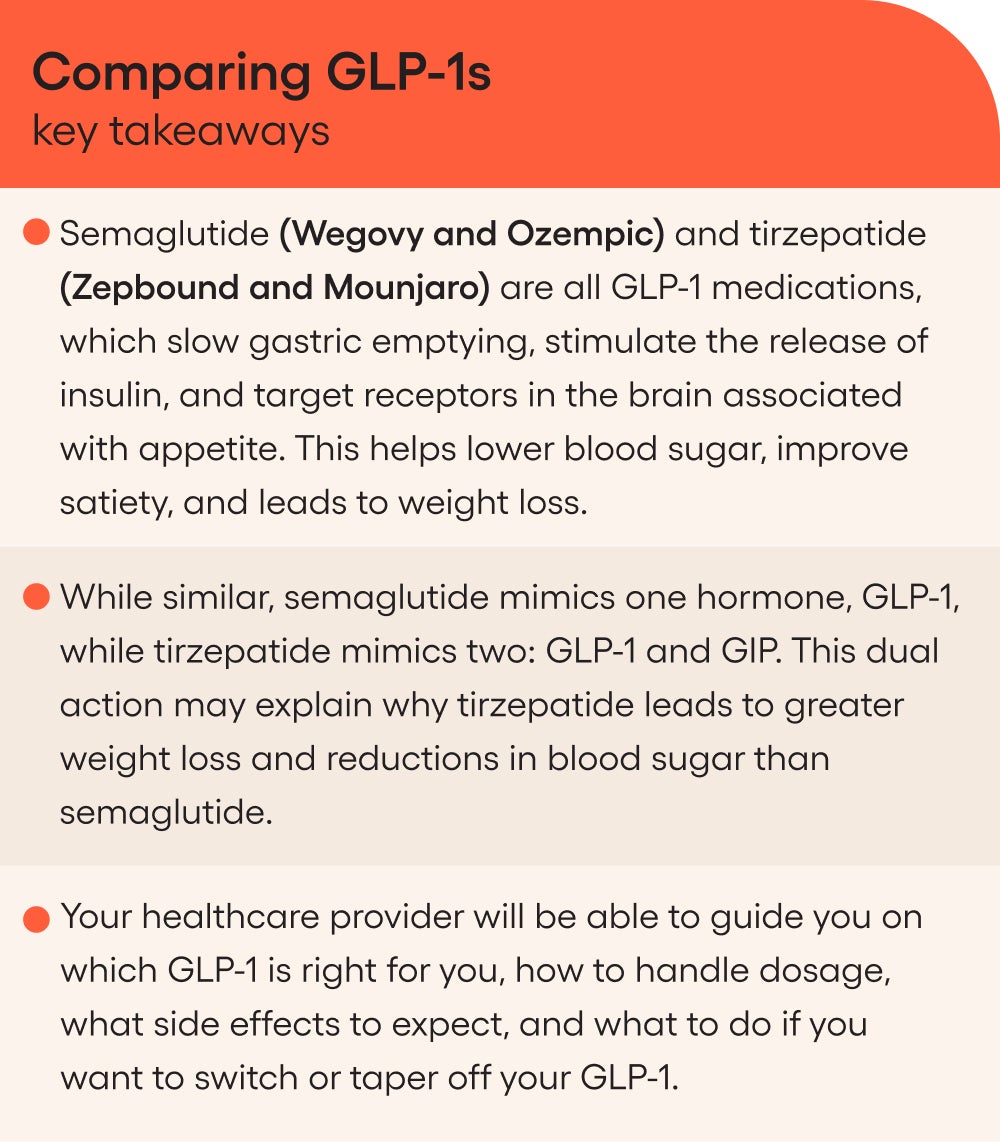
Get started with WeightWatchers Clinic
WeightWatchers offers a comprehensive approach to weight care.
Get started with an initial consultation where we will review your medical history.
If eligible, receive a clinically developed and FDA-approved weight loss and prescription medication plan, insurance coordination, and ongoing support.
Find out more about:
We also offer a GLP-1 companion program to help those on GLP-1s live a healthier lifestyle and feel their best.
Take our quiz