Shellfish School
Everything you want to know about buying, cleaning, and cooking lobster, crab, scallops, clams, and shrimp.
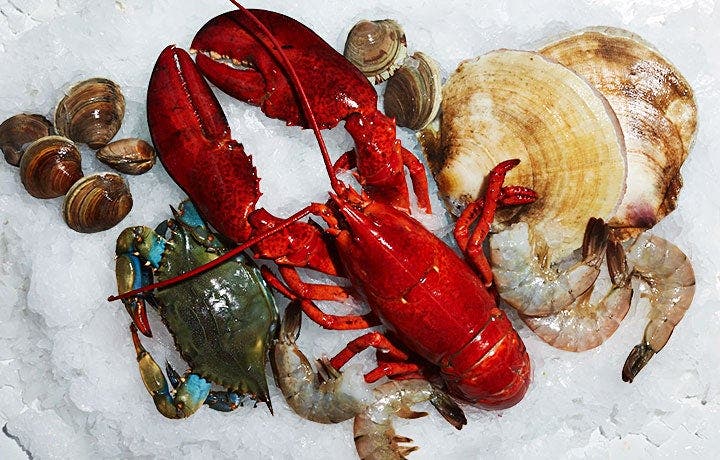
Intimidated by the thought of cleaning and cooking crustaceans, bivalves, and all those other strange-looking but utterly delicious shellfish you see at the fish market? Here’s everything you need to know about choosing and using these amazing proteins from the sea.
Lobster
Buying Lobsters are sold live, or, for a higher price, cooked and shelled. Some markets will also cook live lobsters to order, but you will still need to remove the meat from the shell.
Cooking If you plan to cook live lobsters at home, make sure you have a pot large enough to comfortably fit as many as you plan to cook. Fill the pot ⅔ full with water and add 1 tablespoon salt. Pick up lobsters by the back of the main shell, and drop them head first into boiling water. After water returns to a boil, simmer 7–9 minutes for 1½ pound lobsters; remove from water and drain.
Eating Wrap the claws in an old dish towel; crack the claws and the knuckles (joints) with a hammer, and pry out the meat. Twist the tail from the body, and cut open the underside with a knife or scissors. Pry open, and remove the tail meat.
Crabmeat
Buying There are many types and grades of crabmeat, at a range of prices. Mostly, you will find different types of blue, or Maryland crab, but you might also find Dungeness crab on the West Coast. The most common grades are jumbo lump, lump, or backfin crab. Backfin crab will have more shredded pieces, and more pieces of shell. You also might find canned, pasteurized crabmeat. This is still a refrigerated product, but it has a much longer shelf life unopened, about 60 days. All crabmeat is sold fully cooked and ready to eat. Any of these varieties will make a good crab cake—they will just taste slightly different.
RELATED: Three-Speed Dinners: Crabmeat
Scallops
Buying Sea scallops are the more common type, and they're available all year round. Depending on where you live, you might also find bay scallops, sold in fall and early winter.
Prepping In the US, scallops are almost always sold shucked and ready to use, except that they’ll still have the small muscle on the side. This should be removed using your fingers or a small knife, as it’s tough and chewy. Then give the scallops a quick rinse, to make sure there's no sand or grit, and pat dry thoroughly with paper towels.