The Ultimate Guide to Peaches, Plums, and Nectarines
Find out everything you need about sweet and delicately perfumed stone fruits.

Peaches, nectarines, and plums may well be the pinnacle of summer fruit: sweet, juicy and utterly irresistible. They're all “stone fruits”— that is, these fruits have sweet flesh surrounding a hard, rather large pit (or “stone”). Here’s how to get the best of the season’s stone fruits.
Choosing the best peaches and nectarines
Nectarines and peaches are directly related. Think of the latter as the fuzzier cousin to the former. Here's how to choose the best when shopping.
Know the lingo:Peaches and nectarines fall into one of two categories: "cling" or "free-stone." With free-stone fruit, the flesh comes free from the pit more easily. Free-stone fruits tend to be sturdier and better for sautéing, grilling, and pickling. Cling fruit—with flesh that adheres more stubbornly to the pit—is often sweeter and thus tends to be more popular. (That said, super-sweet varietals of free-stone peaches do exist.) Cling peaches have a softer and more luxurious texture, making them a great (if messy) choice for pies, jams, cobblers, and crisps.
Examine the flesh:There are white- and yellow-fleshed versions, though most have yellow to pale orange flesh with splotches of red or pink. Yellow-fleshed fruits are usually quite juicy and very fragrant. White-fleshed fruits are less acidic and thus sweeter. White-fleshed peaches also bruise easily; transporting them can be difficult, a problem reflected in their higher price.
Give them a sniff:If peaches and nectarines don't smell sweet and aromatic, they probably won't taste sweet and aromatic once you take them home.
Notice the color:The red blush of a peach or nectarine doesn't tell you if the fruit is ripe. Look at the background color. It should be uniform, either golden or pale cream, with absolutely no green blush or tinge.
Try a gentle squeeze:Yellow-fleshed peaches and nectarines should be soft but not mushy in any way. White-fleshed peaches and nectarines can be firmer because the sugar content is higher.
Choosing the best plums
Although there are fewer specific varieties of plums than of peaches and nectarines, there’s more diversity among the varieties: from extremely sweet to moderately tart; from soft-fleshed to quite firm, from round to tapered ovals, from red to yellow to blue to black and all the colors in-between. Here are the two main categories of plums:
European-style plums
Free-stone
Always blue or purple
Small and firm
Less juice but more natural sugar
Often dried into prunes
Japanese-style plums
Clings (the flesh sticks to the pits)
Skin: light yellow to blackish red
Fairly spherical
Very juicy
Best for eating or canning
Plums should be firm (not hard) with a little give but no soft spots. The skin itself should be smooth and firm, never wrinkled (indicating the fruit has passed its prime).
Ripening stone fruit at home
Once a fruit is harvested, it can only ripen so much. A peach or nectarine that is rock-hard or green will never ripen at home. Avoid these unless you intend to make spiced or pickled peaches. Plums should also be selected and eaten at the peak of freshness.
For plums, peaches, or nectarines that are nearly ripe and just need an extra nudge, try sealing them in a bag with a banana or an apple for a day or two at room temperature. The banana or apple gives off ethylene, a gas that aids in ripening stone fruits. The stone fruits will get softer and juicier.
Guide to varieties of peaches, nectarines, and plums
Stone Fruit Recipes
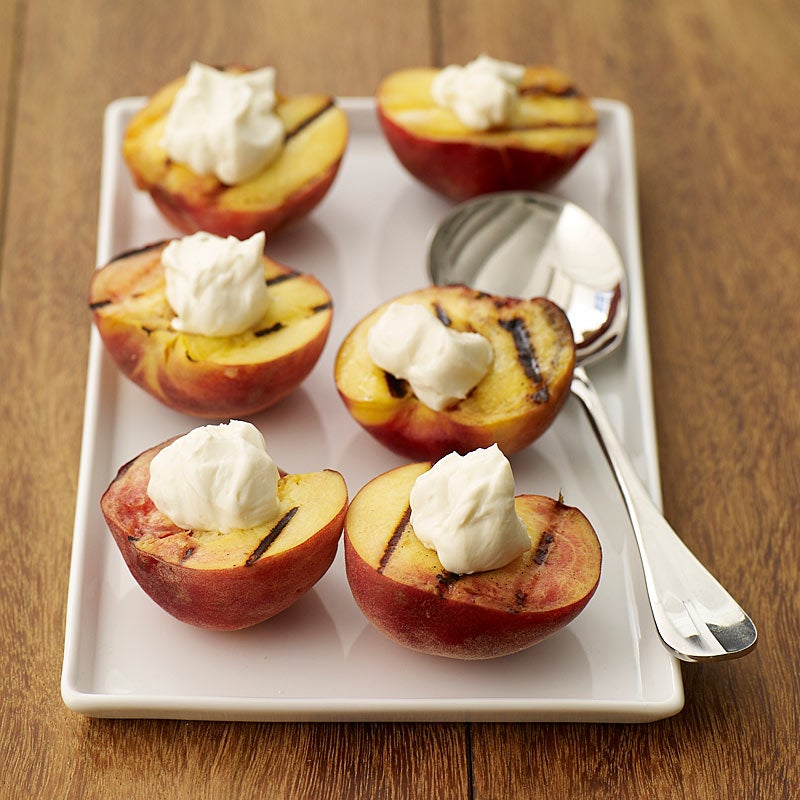

Grilled Peaches
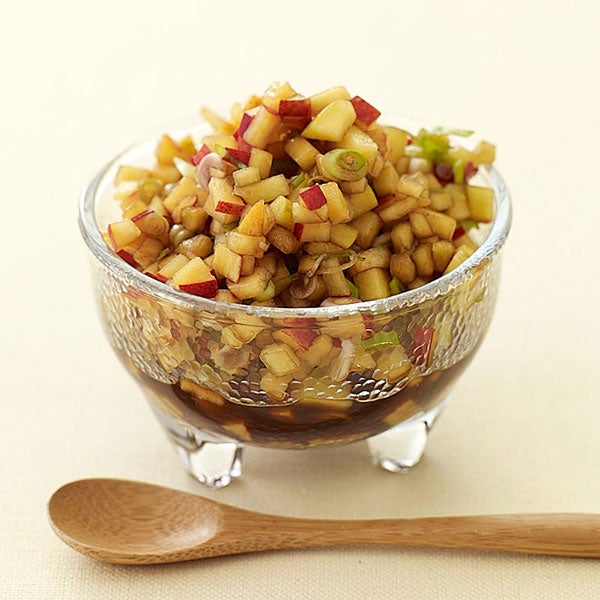

Nectarine and scallion relish
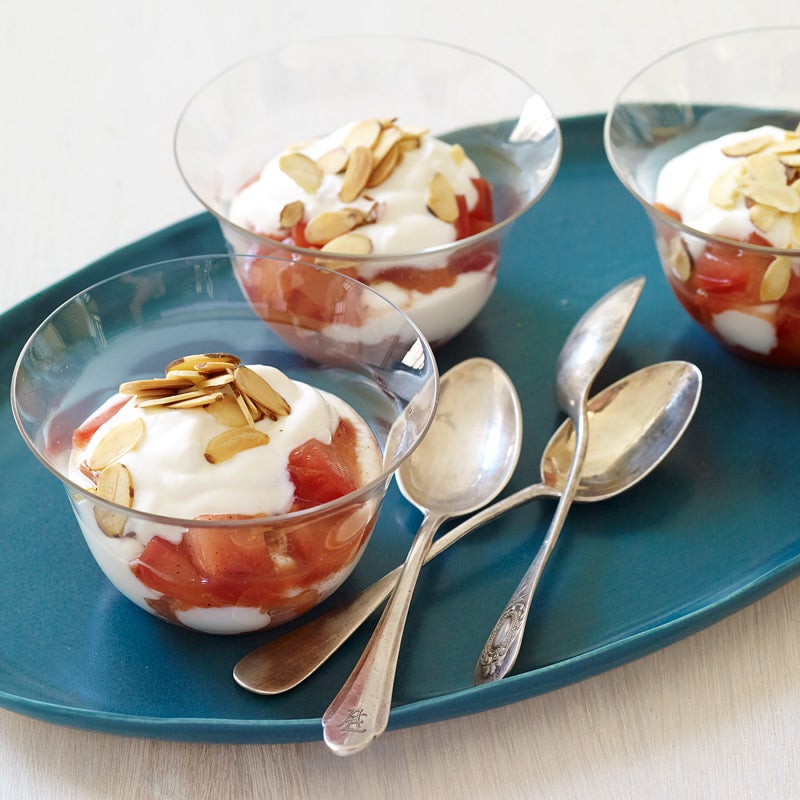

Plum dessert parfaits with yogurt and almonds


Arugula, peach, and goat cheese salad
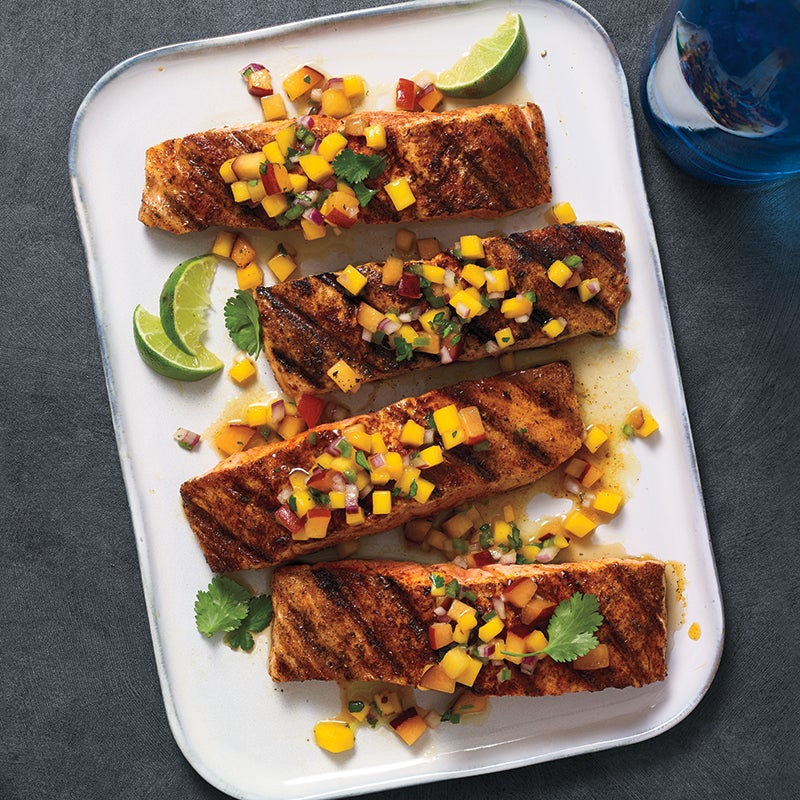

Chili-Rubbed Salmon with Mango-Peach Salsa
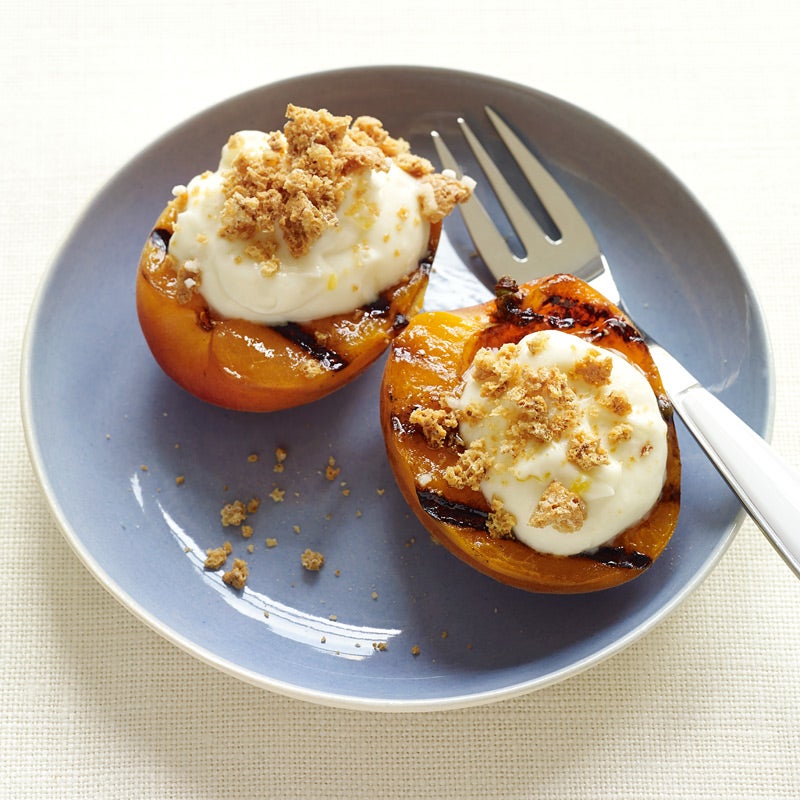

Grilled apricots with cookies and cream
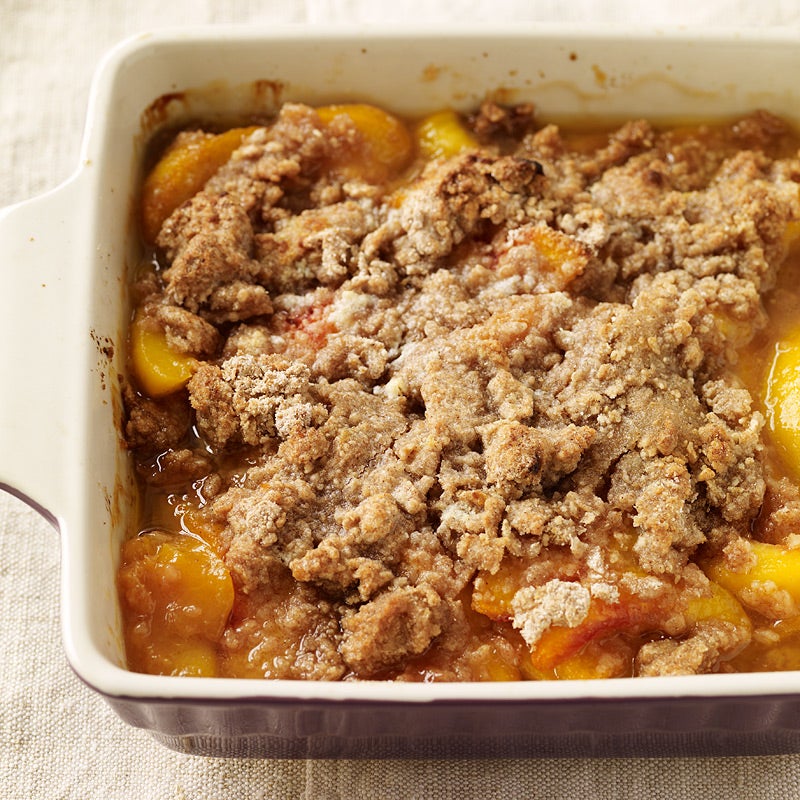

Peach crumble
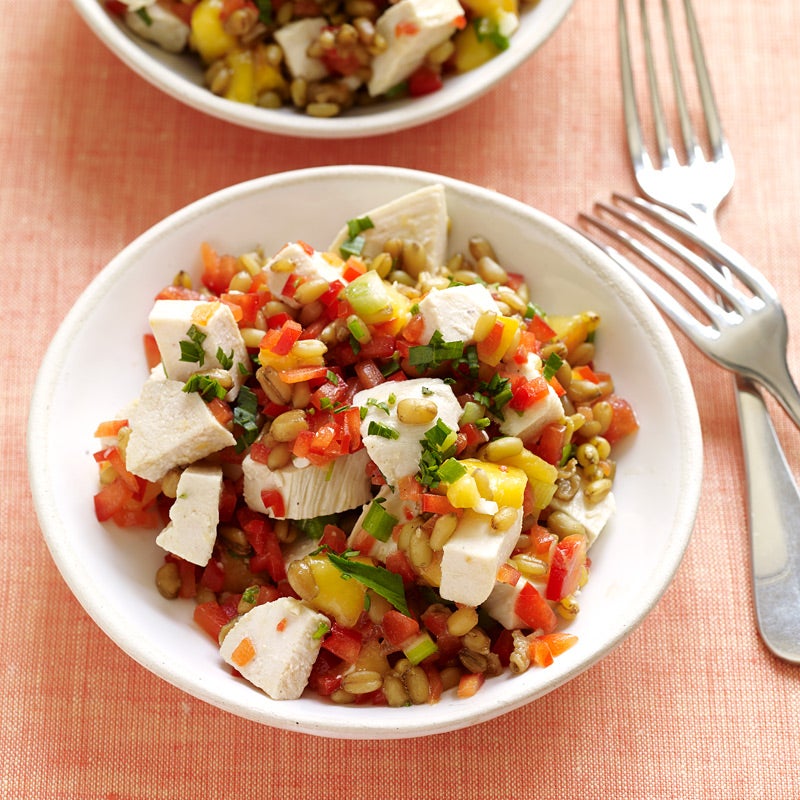

Freekeh salad with chicken, peaches and tarragon
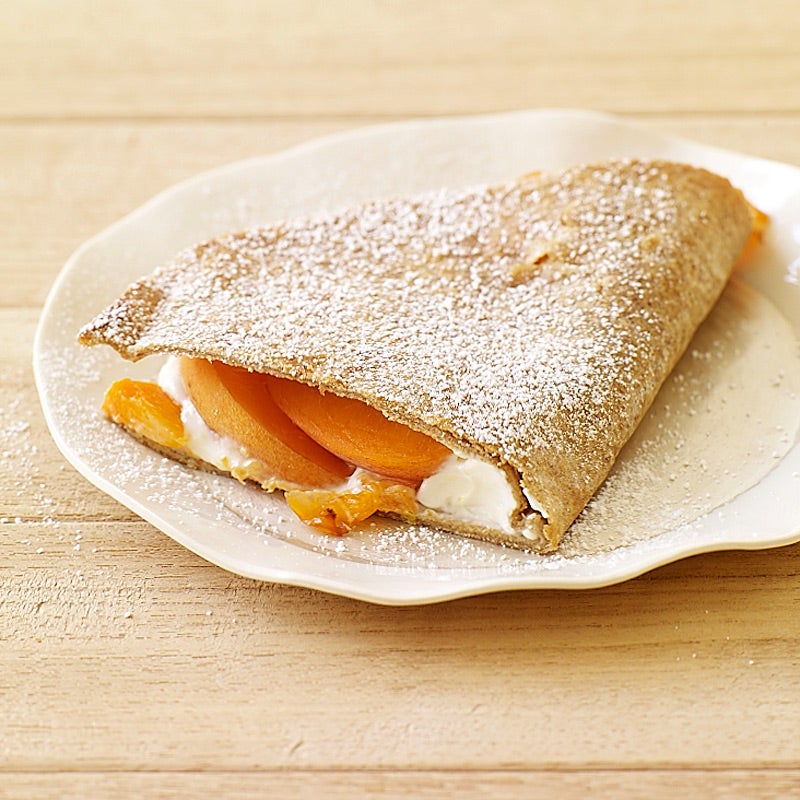

Apricot dessert quesadillas
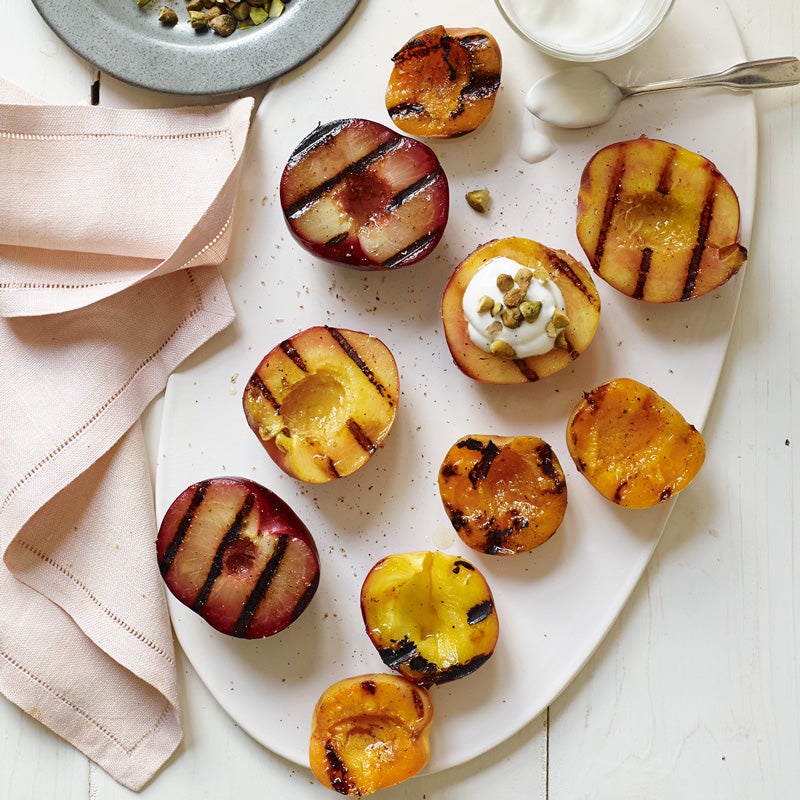

Grilled Stone Fruit with Honeyed-Yogurt & Pistachios
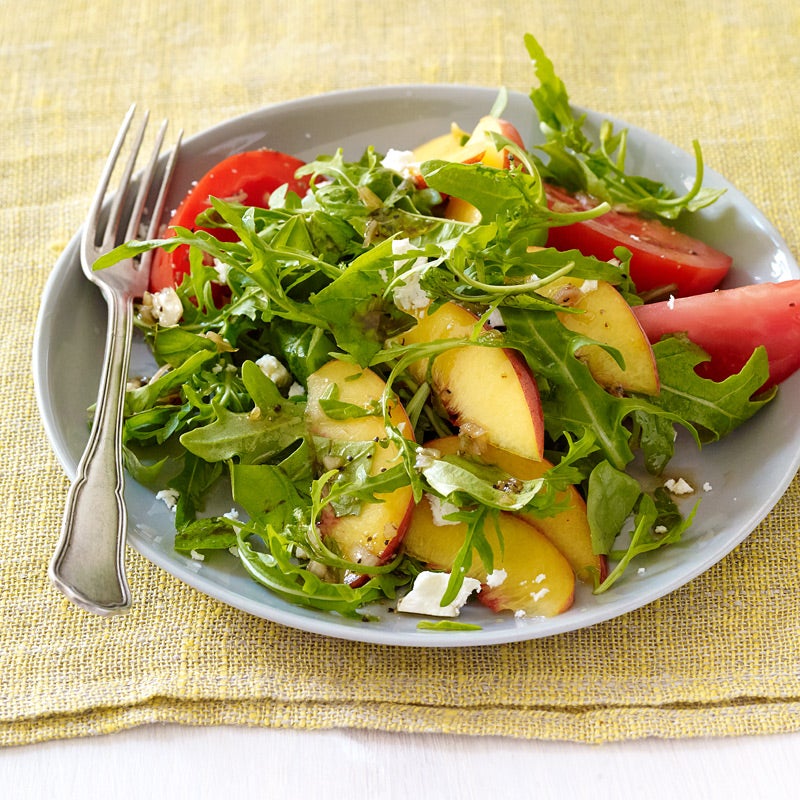

Peach, basil, and tomato salad with balsamic vinaigrette