Why Weight Doesn’t Determine Fitness
Plus, what it actually means to be fit.
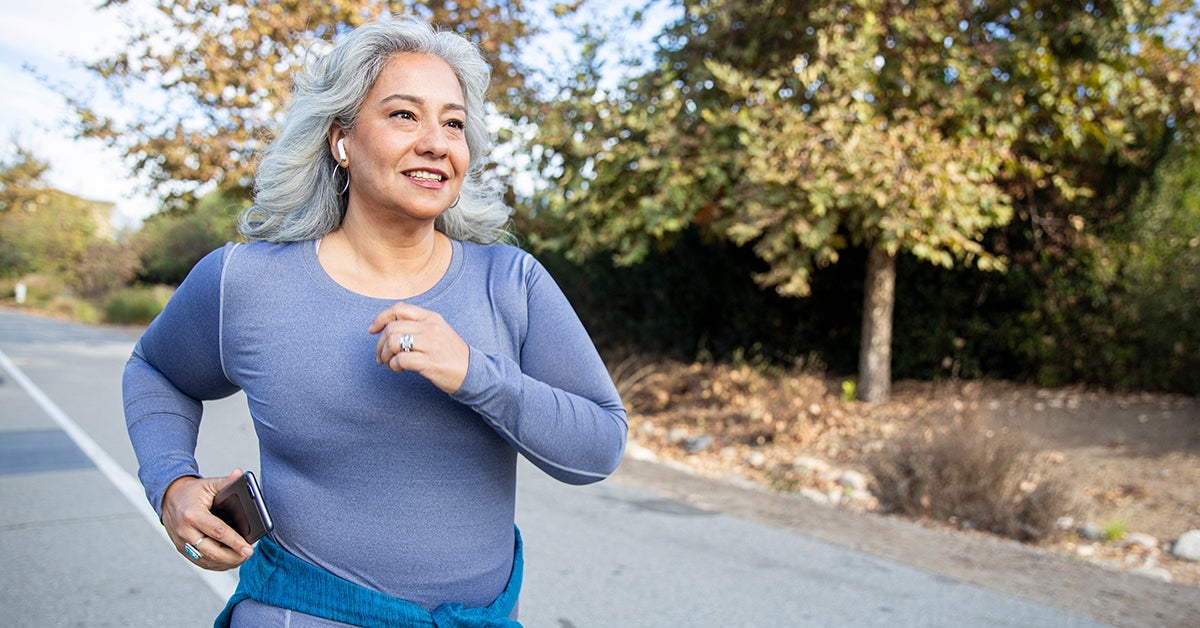
Despite the images of nude athletes in ESPN’s The Body Issue and Instagram feeds full of yogis of every size and shape, it’s sometimes still easy to assume that in order to be fit, you also have to be toned and slim.
But it is absolutely possible to be overweight and fit, confirms Wayne Westcott, PhD, a professor of exercise science at Quincy College in Quincy, MA. “The answer to that is yes, yes, yes.”
Of course, it’s ideal to work toward a healthy goal weight. Excess pounds have been linked to increased stress on the heart, orthopedic issues, and even cancer, explains Deepak Bhatt, MD, MPH, the executive director of Interventional Cardiovascular Programs at Brigham and Women’s Hospital in Boston.
But the number on the scale isn’t the best way to measure fitness. Here, what makes a person fit, how to test your abilities, and—most important—proven strategies that’ll help you grow stronger.
Signs of Physical Fitness
There are lots of ways to define fitness, but generally, Ross Andersen, PhD, a professor of kinesiology and physical education at McGill University in Quebec, says to think about fitness as the aerobic capacity to do daily activities without strain.
Westcott goes further to categorize overall fitness into four general categorizes:
Muscular strength: how well you’re able to lift weight with control
Cardiovascular endurance: how well you’re able to jog or cycle for a longer period of time
Joint flexibility: how well you can move in a full range of motion and relax and stretch your muscles
Body composition: how much fat versus muscle you have
This is where the issue of weight pops up.
Weight Isn’t Everything
Consider professional football players for a moment. Andersen says some players can have a body mass index (BMI)—a measure of body fat based on height and weight—well over 30, putting them in the obese category (anything over 30). But in some rare cases they also have just 4 percent fat. It’s an extreme example. But the general takeaway is that fit, active people tend to have more lean mass than sedentary people, he says.
When it comes to fitness, Andersen says: “We are much more concerned with body fat percentages than weight alone.” Twenty-five percent body fat or less for women and 15 percent or less for men is ideal, says Westcott.
Of course, the American Heart Association lists being overweight as one of the preventable risk factors for heart disease , but it lists being sedentary as one, too.
And where fitness is concerned, the lack of movement might be more damning: “There are millions of people who are thin but unfit, largely due to a sedentary lifestyle,” says Glenn Gaesser, PhD, a professor of exercise science and health promotion at Arizona State University. He adds that overweight people with high cardiovascular fitness have better longevity prospects than thin people with low cardiovascular fitness.
It’s still best to aim for a healthy body weight, says Andersen. “If you were to walk up a flight of stairs and put two 25 pounds dumbbells in your hands, it would be much more work,” says Andersen. “Most of the time fat tissue doesn't metabolize very much—it just comes along for the ride as excess baggage.” To this extent, studies find that increased body fat is linked with a decreased level of aerobic fitness.
But Westcott notes that the bigger question is: Did you do the training necessary to develop a strong heart? “You can’t do that just by losing weight or gaining weight.”