Walk It Out
Ready to hit the road (or trail)? Here's how to make your move.
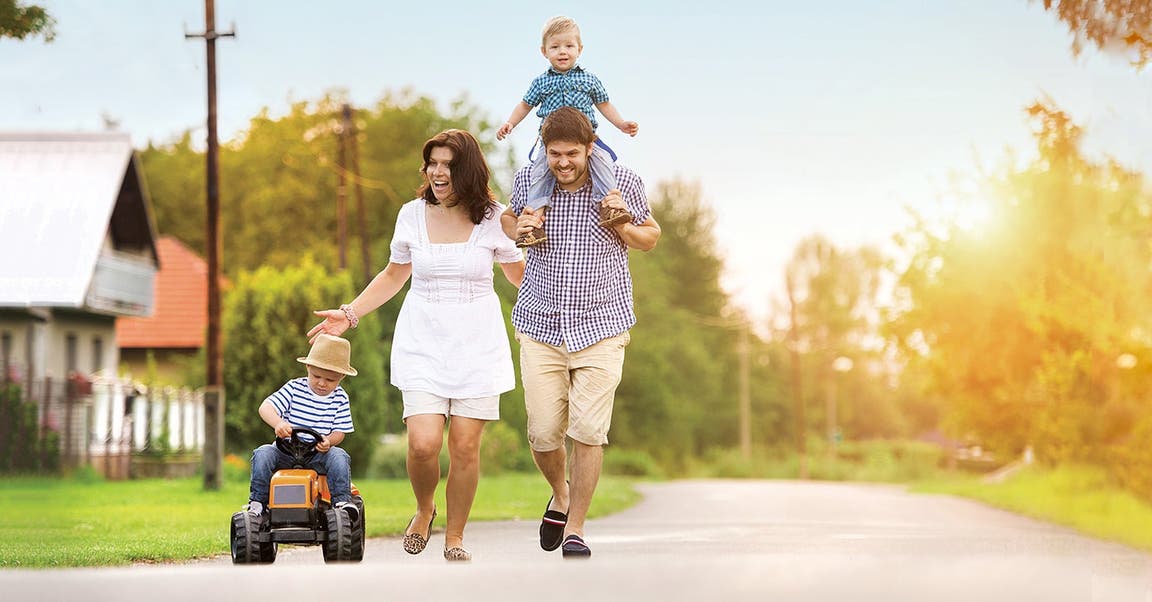
Isn't it great that something so elemental and natural can be so good for you? The simple act of walking can lift your spirits AND help improve your physical health. And, as we discuss in your Weekly, there's more good news: brisk walking 30 minutes a day can help keep off the weight you lose. (Aim to keep a steady enough pace that you can still chat easily.) Walking can be a body toner as well: Striding uphill works your calf muscles, hamstrings, and buttocks. Downhill walks are great for your thighs (quads). Walking on level ground strengthens your abdominals and lower back.
Where to start
Walk anywhere you like, whether it's on a treadmill or outside at the park. Experiment with different routes, working up to walks that will challenge you with hills and varying terrains.
If you're not a regular walker, sports dietitian Helen O'Connor, PhD, suggests starting small, like parking your car farther away from your destination than you need to. Walk to work, or just to the next bus stop or subway station. Try taking the stairs once or twice a week, or get off the elevator one floor eary and walk that extra flight.
When you want to step it up....
Start with a half-mile walk, three to four times a week. If you've been inactive, 15 minutes of walking may be plenty for your first few weeks. (It's a good idea to discuss your plans with your doctor.) Then increase the frequency, aiming for a 30-to-60-minute walk each day of the week. Gradually raise your intensity level by walking on inclines, with hand weights, or on wet sand.
As you build your strength, steadily move to a more challenging pace. You should still be able to hold a conversation even if you're breathing a harder. At the end of your session, you should be tired and sweaty but not exhausted. At this workout level your body is successfully burning fuel. If you prefer to walk indoors on a treadmill, get your heart pumping by varying the machine's speed and incline.
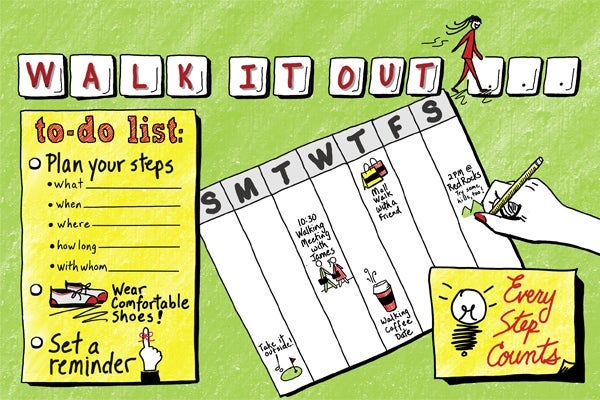
Illustration by Deborah DeLue
Ready to get started? Check out our 8-week plans for beginner through advanced walkers.
What to wear, what to carry
Comfortable clothes
Look for fabrics that draw sweat away from the skin. Wear layers, and peel them off as you warm up.
Athleticshoes
Find walking shoes that aren't overly snug, because feet swell as you walk. Cushioning under the heel and front of the foot are important, as is flexibility, so the ball of your foot can move freely. It's usually worth it to be fitted at a store that specializes in athletic footwear.
Socks
Choose fibers that evaporate sweat and prevent blisters. Try double-layered or padded socks for walks on hard ground.
Fitbit or Pedometer
These handy and motivating devices measure steps taken, walking distance, calories burned, and more!
Waterbottle
Drink before you start and every half hour, more often if you're sweating. Plain, cool water is fine; no need to waste SmartPoints on sugary sports drinks.
Sunprotection
Wear a hat, plus a layer of waterproof high-SPF sunscreen. Don't forget the back of your neck, tips of your ears, tops of feet (if you're wearing sandals) and lips.
Identification
Bring an ID and a few dollars, in case of an emergency.
Tunes!
Whether via a music app on your smartphone or an MP3 player, your favorites can inspire you to walk a little farther and faster.
Technique Tips
The walking step is a rolling motion.
Strike the ground with your heel, roll through, then push off with your toe. If your feet land flat, your shoes are probably too stiff.
Watch your posture.
Imagine that you have a piece of string coming up through the top of your head. This visualization will straighten you up in seconds.
Tighten your abs.
Holding in your stomach helps support your lower back and keep abdominals strong.
Swing arms naturally.
They help give you rhythm.
To walk faster, don't lengthen your stride.
Take shorter, quicker steps—you'll maintain form and be less injury-prone.