Safe fall fitness
Get active and stay safe when the days get short and the temperatures drop.
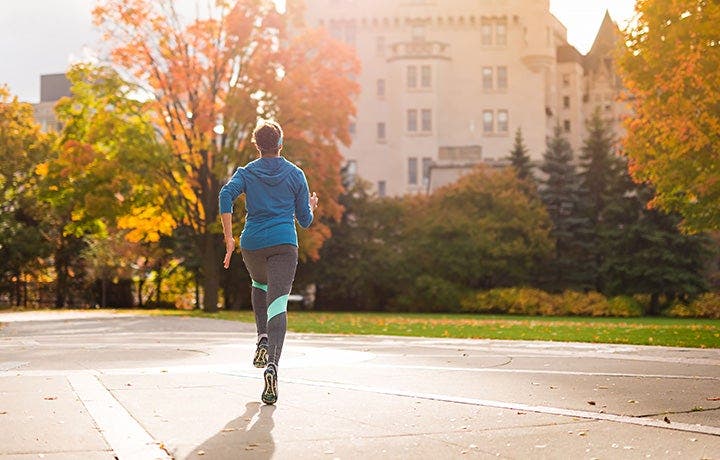
Fall is an excellent time for exercising outdoors: The humidity and temperature are lower, yet there's still some daylight left when you get home from work or school. Many communities schedule walks, races, and family fitness events (often for charity causes) during the fall.
Revving up your physical activity now can also help fight the hibernation mentality that sets in as daylight dwindles, says Cedric Bryant, PhD, chief science officer at the American Council on Exercise. "Some people find that without fresh air and light, the change in season triggers consumption of more calories," says Bryant.
Still, with fall's nippy air and loss of light, it's important to stay both comfortable and safe. Here are some simple steps to minimize discomforts and dangers:
1. Start reflecting
Don't just trust the reflectors on shoes or bikes to make you visible to motorists when you're out at twilight or later. "You really need something that closely corresponds to a driver's line of sight," says Bryant. Best bet: light-colored clothing topped with a vest made of reflective material or crossed with reflective tape.
2. Bear the glare
The sun's rays slant more in fall, so keep in mind that when the light is at your back, it's in the eyes of oncoming drivers. Try to stay off busy streets, and face traffic when on foot so you can see what's coming. Wear shades to cut glare.
4. Spend more time warming up
If you usually skip a warm-up, start by taking at least five minutes to do some light exercise, such as easy walking, before your main workout. While your body's core maintains a steady temperature no matter what the season, muscles, tendons, and ligaments will be colder in cool air. "That means it takes longer for them to warm up and become more pliable to protect against injury," says Bryant.
3. Get a partner
Walking, jogging, or pedaling with a companion not only makes you more likely to stick with a program, it also makes you more visible to motorists.
5. Dress in layers
Get off to a warm start by wearing a T-shirt made of a material that wicks sweat away from skin (not cotton). Top that with breathable items such as a fleece vest and/or a sweatshirt or windbreaker (and don't forget gloves and a hat if it's chilly enough). That way, you can remove clothing if you're getting too warm.
RELATED: 8-Week ready-to-run plan
Before starting any new exercise routine, make sure to check in with your doctor.