What to know about menopause testing and diagnosis
Here’s how clinicians diagnose menopause and perimenopause, when hormone tests may be considered, and why at-home kits might not be definitive.

In this article:
- 1/ Can you test and diagnose menopause and perimenopause?
- 2/ What at‑home menopause tests can (and can’t) tell you
- 3/ Special situations that may warrant menopause testing
- 4/ How to prepare for a menopause diagnosis appointment
- 5/ The bottom line on menopause testing and diagnosis
- 6/ Testing and diagnosing menopause: key takeaways
While most women experience the menopause transition in their late 40s and early 50s, it can be confusing to know when it’s actually happening to you. That’s where a test would come in handy. But even though there seem to be clear tests for everything these days — pregnancy, Covid-19, strep throat, you name it — you don’t hear a lot about one for menopause and perimenopause. Here’s a closer look at the test options available, whether they’re reliable, and how clinicians actually determine if someone is experiencing menopause.
Can you test and diagnose menopause and perimenopause?
Perimenopause, which is the stage leading up to the end of your menstrual periods, can have a wide range of symptoms: hot flashes, mood swings, irregular periods, difficulty sleeping, low energy, vaginal dryness, brain fog, and more. These symptoms can come and go and different women have different experiences, making it hard to know if they’re due to perimenopause or something else. That’s why it can feel so reassuring to get confirmation that there’s a reason behind these changes by taking a perimenopause test.
But for most women, there’s no need for a test. Your clinician will go over your cycle history, symptoms, health history, and more to determine if you’re experiencing perimenopause.
However, if you’re younger than 45, your doctor may also perform tests to make sure there’s nothing else going on.
These tests look at hormones such as:

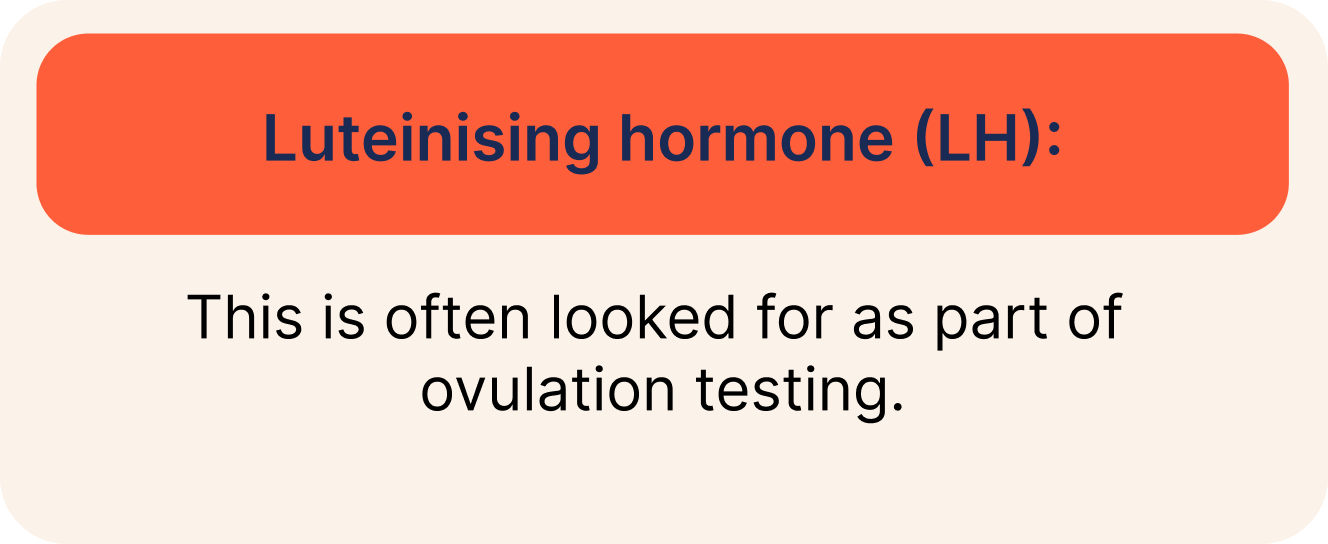
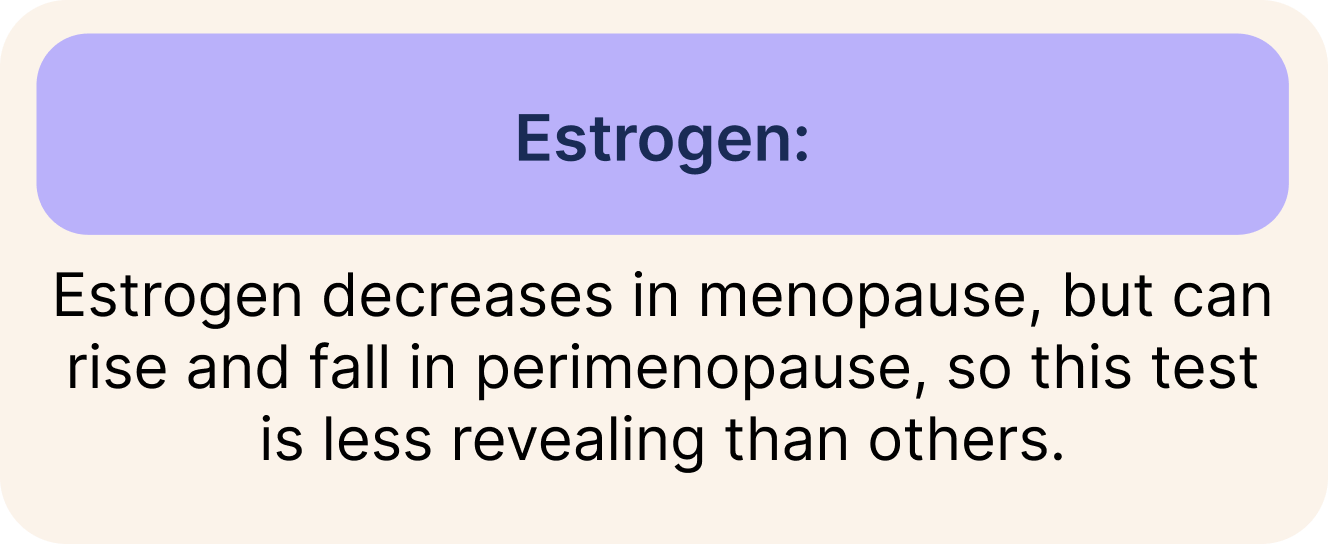
While tests may benefit some women, the significant fluctuations of these hormones can make interpreting the results challenging (and possibly misleading).
Understanding FSH, LH, and estradiol
The ovaries produce, among other things, the hormones estrogen and progesterone. The production of these hormones is mainly under the control of other hormones, specifically FSH (follicle-stimulating hormone) and LH (luteinizing hormone). As women get older, the ovaries stop responding to FSH and LH like they did before. As a result, the ovaries produce less estrogen while FSH levels increase.
Because of this, in some women, high levels of FSH can confirm if a woman has reached menopause. However, there are other factors that impact FSH levels such as medication and the timing of your cycle. And during perimenopause, the ovaries’ response to FSH can wax and wane.
Tests used to rule out other conditions
The symptoms of perimenopause and menopause can be very similar to other conditions, so in an effort to rule out all possibilities, your clinician may order other tests too. These can include, but aren’t limited to:
Thyroid panel
This test uses your blood to assess how well your thyroid gland is functioning. It can help to identify thyroid disorders. Your doctor may want to order this test for you because symptoms of an irregular thyroid may overlap with perimenopause. For example, signs of an overactive thyroid gland may include mood swings, sleeping difficulty, sweating, and tiredness. While an underactive thyroid gland can result in brain fog, fatigue, and mood changes.
Prolactin test
Prolactin is a hormone created by your pituitary gland, a tiny gland found in the base of your brain. Prolactin can change how the ovaries function and cause symptoms like changes in your sex drive and irregular menstrual cycles. Prolactin tests are fairly common for perimenopausal women who are suffering from headaches and vision changes. These tests work like a simple blood test where a sample will be taken and the hormone levels will be analysed.
Pregnancy test
You may be asked to take this test to make sure your fatigue, missed periods, and mood changes aren’t due to being pregnant. Whether you take a blood or urine test, they test for hCG, which is produced by the placenta during pregnancy.
What at‑home menopause tests can (and can’t) tell you
While most tests for menopause are ordered by a physician, there are some designed for you to take at home. At-home test kits claim to measure the level of hormones in your urine, which can then indicate whether menopause has begun. They look for the same three hormones as blood tests do: FSH, LH, and estrogen.
But while it may be tempting to do a test on your own, at-home tests for perimenopause can be inaccurate. Results can fluctuate from test to test and can be skewed by various factors. It’s important to recognize that at-home tests are not a substitute for a professional diagnosis nor are they definitive. If you’re experiencing symptoms that you’re concerned about, heavy bleeding for example, then consulting with a clinician is the best thing you can do. If you do decide to take a home test, bringing the results with you can help with your professional diagnosis.

Special situations that may warrant menopause testing
For most women, testing for menopause isn’t necessary, but there are special situations where it can be a helpful proactive step in managing your health. These can include:
You’re experiencing perimenopause symptoms or your periods have stopped earlier than expected. Many women begin perimenopause in their mid-forties or later. If you’ve stopped having periods earlier than that — especially if you’re younger than 40 — testing can confirm the reason behind the symptoms and whether it’s premature menopause.
You suspect primary ovarian insufficiency. This happens when the ovaries aren’t working as they should before you reach your forties. It could be that they don’t release eggs as frequently as they should or produce enough estrogen. Testing for menopause can help see what’s going on.
You’ve had cancer. Some cancer treatments, such as chemotherapy, can affect your ovaries and how they work, which can then lead to early menopause. While your doctor will be able to explain whether your cancer treatment can trigger menopause, a test may help your doctor diagnose you.
How to prepare for a menopause diagnosis appointment
If you have an appointment scheduled with your medical care provider to see if you’re experiencing perimenopause, it can help to come prepared. Getting ready for the appointment can help things run smoother, and ensure you have all the right information beforehand. When you book your appointment, you may be advised to bring specific information with you, but even if you aren’t, it’s good to make a note of the following:
A two-to-three-month log of your cycle and symptoms: Typically this, along with some personal information, is all your doctor will need to provide you with an accurate menopause diagnosis. Having this information written down, either on paper, your phone, or in an app, means you can provide accurate and comprehensive information.
A list of your medications and supplements: This can also help your doctor diagnose you since some medications and supplements can have side effects similar to menopause. Your list of medications can also help your doctor guide you through menopause care.
Your family history and personal priorities: Your family history can provide additional insight into your general health and how that will affect your menopause care. Likewise, it’s important to think about your priorities. While your doctor can give advice and recommend treatment, think about your goals and what you want to get out of your menopause care.
Thoughts on treatment options: If your clinician is able to diagnose you without the need for a perimenopause test, it can be good to ask about treatment. Start by discussing what you want or any particular concerns you may have, and your doctor should be able to advise.
This list is not definitive. Bring up any other questions or concerns to your menopause diagnosis appointment. After all, any steps or treatment plans that you end up following should be personalized to you.
The bottom line on menopause testing and diagnosis
A menopause diagnosis can provide a great deal of relief, especially if you’re experiencing unpleasant symptoms. Fortunately for most women, confirmation can be as simple as speaking with a doctor and discussing your symptoms and past cycles.
Menopause or perimenopause tests are usually only used when menopause is unexpected or difficult to prove. While you can choose to take menopause tests yourself using at-home kits, they’re not always accurate and you may be unable to interpret the results without the help of a doctor. Clinical menopause tests are far more accurate and usually involve a blood test, which will check for hormone levels in your blood.
Testing and diagnosing menopause: key takeaways