Real talk about GLP-1s, pregnancy, and postpartum: A conversation with Emily Oster and Claudia Oshry
The rapid rise in GLP-1 use in women of childbearing age means new, pressing questions about how these medications impact fertility, pregnancy, breastfeeding, and postpartum. We sat down with some friends to talk about all of it.
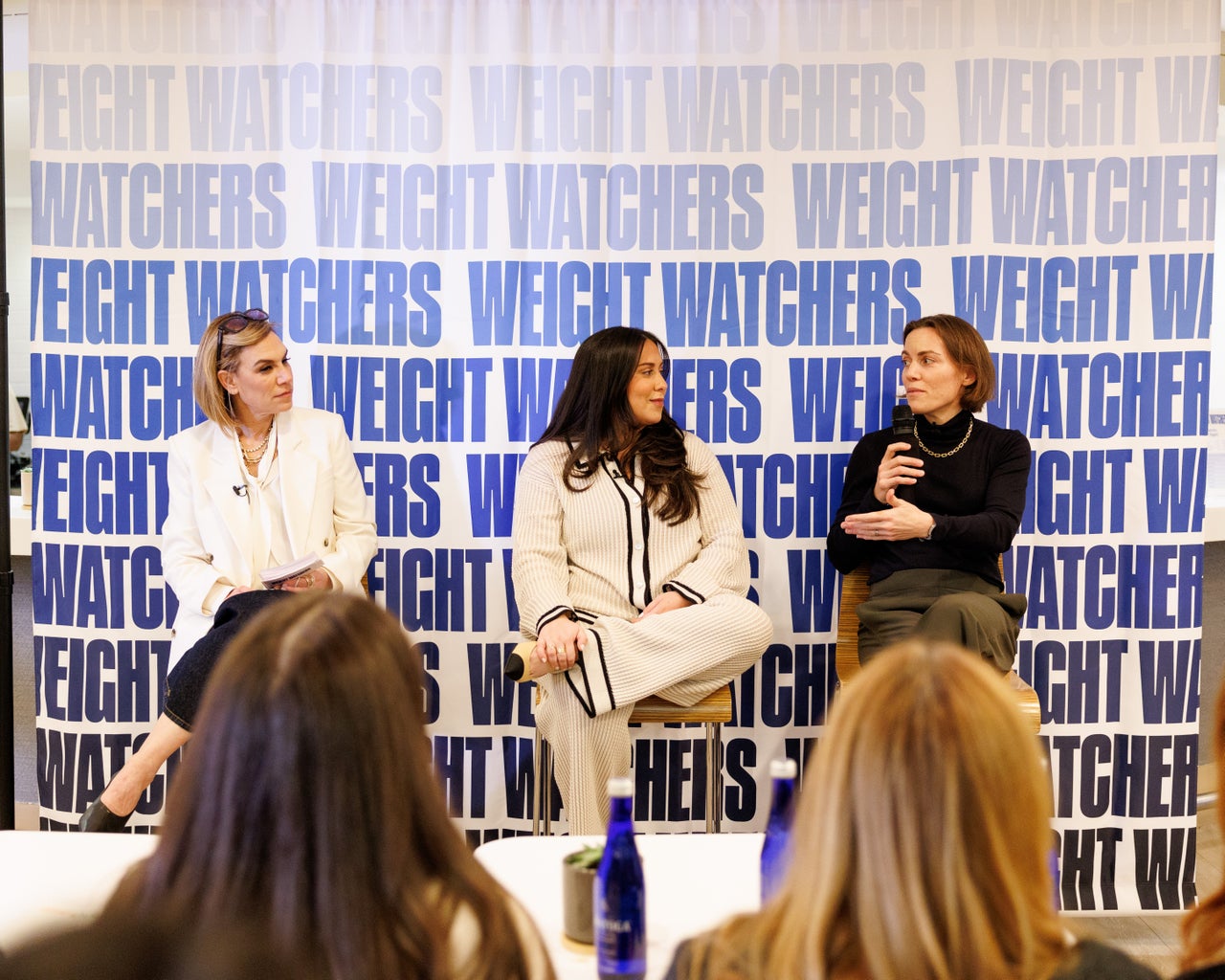
For all of the talk about GLP-1 medications (including (including Wegovy® and Zepbound®) as wonder weight-loss drugs, their use during women’s childbearing years has been conspicuously missing from the conversation. We’re finding different health benefits from these drugs every single day — is increasing fertility one of them? Is it safe to use the medication while breastfeeding? Can you use a GLP-1 postpartum to lose a few pounds of baby weight? Factor in that studies show women are more likely than men to be on a GLP-1 (women ages 30-49 are twice as likely as men to be on a GLP-1), and it becomes even more urgent for science to help us understand how these medications can affect our bodies pre- and post- pregnancy.
To get answers, WeightWatchers’ Chief Experience Officer Julie Rice moderated a lively, science-based conversation with Professor Emily Oster, a mom, renowned economist, founder of ParentData, and bestselling author of Expecting Better, Cribsheet, and The Family Firm, paired with real talk and comic relief from Claudia Oshry, a mom, host of The Toast podcast, and bestselling author of Girl With No Job.
Read on for their experiences, recommendations, and hopes for what GLP-1 research will focus on next.
On the rise of GLP-1s for weight loss
Claudia Oshry: I’ve used one for my journey and loved it. I was fat my whole life, and then I finally wasn’t. There really shouldn't be a stigma — taking a GLP-1 should be thought of and talked about the same way we take pain medicine, cholesterol medication, or an antidepressant. It's a miracle and it should be applauded.
Professor Emily Oster: With these medications, there’s of course value at the individual level, but then there’s also a broader set of potential benefits for weight and beyond. There is a very large share of people in the U.S. who would benefit from access to these drugs. I wrote an article called “ Ozempic for All,” saying on the policy side, we need to be thinking more broadly about how we can make these medications accessible to more of the population.
On GLP-1s and fertility
Professor Emily Oster: PCOS (polycystic ovary syndrome) is a very common cause of infertility. We see very clear evidence, especially for people with PCOS, that treatment with a GLP-1 can make ovulation happen more frequently and can then support pregnancy; that’s quite well established in the data. If you are someone who has PCOS and is thinking about trying to start a family, this is a good idea to at least consider as one possible component of treatment. And a lot of infertility is unexplained.
Claudia Oshry: Maybe that’s why people are calling this the Ozempic baby boom! Do GLP-1s make you more fertile, or does being at a healthier weight make you more fertile?
Professor Emily Oster: I think that's a little bit unclear. It's very clear that being at a healthy weight can promote ovulation. And so when we think about GLP-1 babies, that can mean people who weren't ovulating so didn’t use birth control, then they started on the medication and start ovulating, and they didn’t intend to get pregnant and did. Weight loss itself would have some of that role, and I think there’s also probably some effect beyond just from weight loss, though that's not super well-understood.
For the most part, though, people should not be on a GLP-1 for weight management while they are trying to become pregnant. If your pregnancy was unplanned, stop taking it when you find out you're pregnant and talk to your doctor — but don’t worry, we have a lot of animal evidence that suggests that this is really not something to worry about. Generally, you want to be off the medication in part because you are trying to grow a person, and that requires being fully nourished.
On GLP-1s and breastfeeding
Claudia Oshry: Well, it's all I think about because I’m in this now, and I actually slid into Emily’s DMs to ask her about this. I'm currently going into my seventh month of breastfeeding. I've decided to wait until I’m done breastfeeding [before restarting my GLP-1], which has been a real struggle. I love feeding my baby, and I love GLP-1s. I could see myself going full Game ofThrones and breastfeeding until my kid is eight because I love it so much, so it could come to an end anytime between now and 2036.
Professor Emily Oster: A thing we unfortunately don't have is large, randomized trials with many years of follow-up where people are at a GLP-1 versus not and they've been breastfeeding.
But there's a second piece, which I think is more what Claudia had on her mind based on her DMs, which is that this medication is going to cause you to consume fewer calories and it is likely to therefore drop your supply, or at least certainly it could.
So generally at the beginning of breastfeeding, when you're providing a lot of nutrients to your baby and you're still establishing supply, that is not a time that a lot of intentional weight loss through medication is likely to be a good idea.
Editor’s note: Current medical guidelines advise against taking a GLP-1 while breastfeeding, considering the unknown risk.
On using GLP-1s to lose the baby weight
Professor Emily Oster: It depends on what your doctor says and what your risk category is and whether this is the right approach for you. GLP-1s are an incredibly effective tool in the toolbox for some people, and then it’s very clear that for other people, this wouldn't be the right approach. For example, because of the potential muscle loss, if you were a serious athlete, this is not a good way to lose your baby weight, and there are other categories like that.
Claudia Oshry: I talk to my girlfriends about it and how much time you want in between your babies, and weight is such a big part of that. A lot of people want to lose their baby weight before they get pregnant again, while some people just would rather bang it out, have babies closer together and then figure out losing the weight when they’re done having babies. The medication makes it feel realistic and manageable to think about losing 40 pounds.
Professor Emily Oster: Speaking of that, it depends how much weight you have to lose. Fundamentally, this medication is a tool for a significant amount of weight loss, not for someone who wants to lose 10 pounds. That actually is an important part of thinking about how we use these medications. For example, doctors aren’t just giving people statins because their cholesterol feels like it’s moving in the wrong direction; there’s a cutoff for when to prescribe it and the dose, and there should be a cutoff for this, too. And I think that’s part of recognizing GLP-1s as a medical tool and not makeup.
On the future of GLP-1s
Professor Emily Oster: This is really an evolving data space. If I had a crystal ball, I think we're going to see a bunch of stuff that goes outside of weight and more into what’s called “impulse control.” So far anecdotally we see reductions in alcohol and drug use, and I think we’ll have the first large-scale, randomized trials for alcohol and drug use trials in higher-risk populations and a variety of impulse control indications. For example, what if you prescribe this to people with the appropriate indications when they’re leaving prison — do you see a reduction in recidivism?
The second thing I think we’ll see is more practical, on-the-ground research about what happens with GLP-1 use long-term. Once people lose weight, do they stay on the same dose forever? How should people either ramp off entirely, or ramp down to smaller doses?
The third thing that I hope will evolve is that right now, people do lose a fair amount of muscle weight on this, so there’s clearly some work to be done about how you retain muscle mass, which is important, particularly in older populations.