My husband lost more than 60 pounds on a GLP-1. Why wasn’t I thrilled?
I spent nearly two decades trying to lose and maintain weight. When my husband dropped 60 pounds on a GLP-1, it didn’t just change his body — it threw our entire relationship off balance.
)
For the past five years, when and what to eat for dinner has been a bone of contention in my marriage — ever since my husband Eric started a GLP-1 for type 2 diabetes (T2D) and weight loss. When we met back in 1986, Eric was at a healthy weight, but he’s gained and lost over the years, and was diagnosed with T2D more than 25 years ago. As he neared his 60th birthday, he tipped the scales at well over 300 pounds and was the most sedentary he’d ever been.
Food was our love language, and we both were fluent — especially when it came to ordering three courses and a second basket of bread at our favorite restaurants. Eric was never a light eater. At our neighborhood Italian spot, he could polish off a heaping plate of breaded veal cutlet, a side of spaghetti, and tiramisu without a second thought. And, for nearly the first 20 years of our marriage, I indulged right along with him.
My weight-loss journey began in 2008, when I lost my job at a health magazine. I’d served as the entertainment director — the person responsible for booking A-list celebrity covers. Ironically, due to the stress of having to deliver top-tier talent 12 times a year or risk the publication’s sales nosediving, I was anything but the picture of good health. In fact, over six years, I’d gone up two clothing sizes, and I was struggling to zip my size 12 jeans. So, I decided to attend a Weight Watchers Workshop in the basement of a Park Avenue office building.
By mid-2009, I’d lost more than 40 pounds by building habits that have largely stuck: I move my body regularly, keep an eye on portions, and check into Workshops when I need support. With some encouragement from Eric, who had loved cycling since childhood, I started road biking — eventually riding 20, 50, even 80 miles at a time. And I continued solo long after he gave up riding.
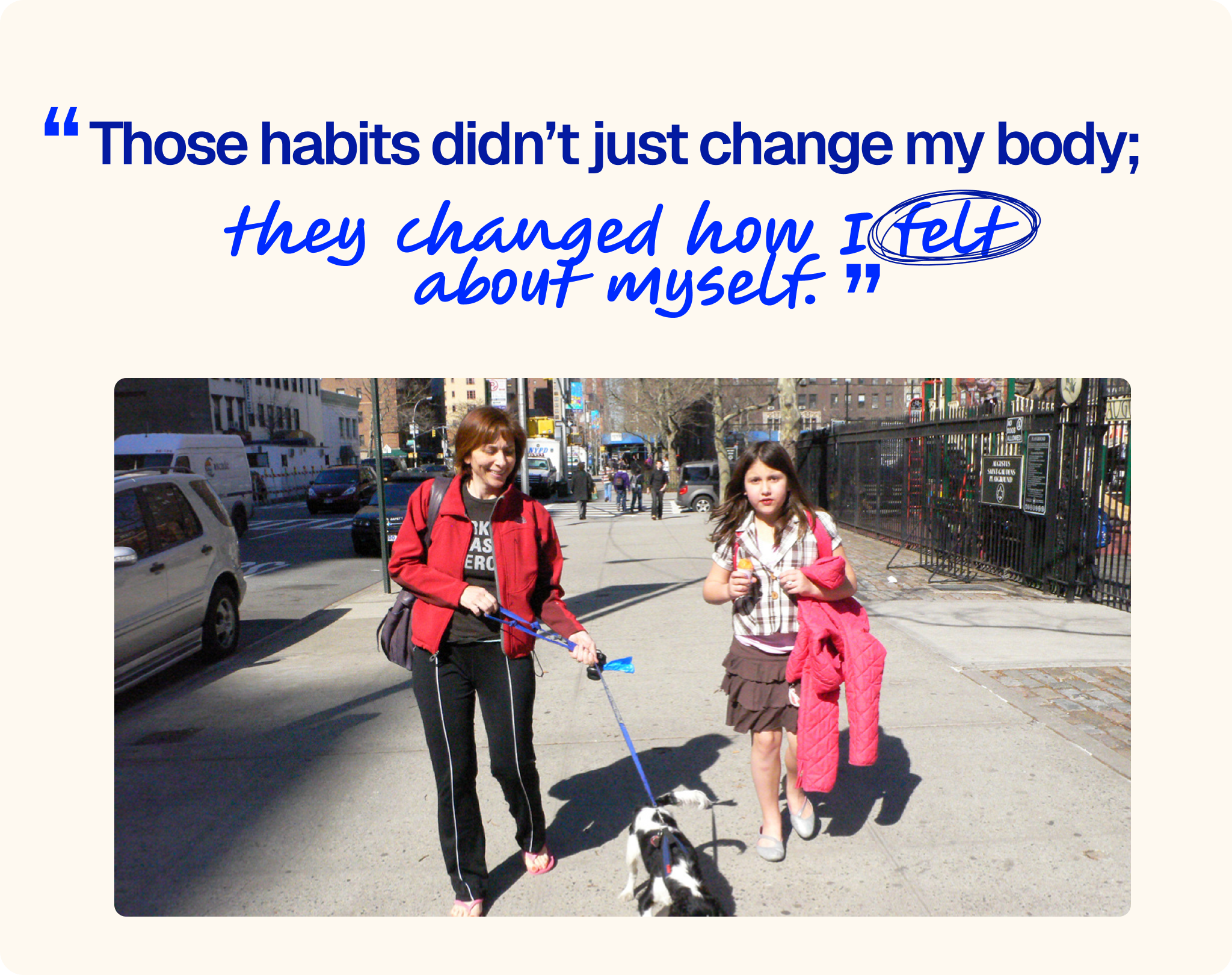
Those habits didn’t just change my body; they changed how I felt about myself. When we vacationed in winter, I wore two-piece bathing suits rather than the constricting one-piece “miracle” suits I’d relied on to hide my midsection. Was my body perfect? No. But I was proud to show it off and to show our daughter, Esmé, that eating and living healthy took recognizing deep-rooted behavioral patterns and a willingness to find healthier replacements.
But my unwavering commitment to living healthier created tension between Eric and me. While I was measuring portions, he was bringing home party-sized bags of chips and tubs of full-fat ice cream. My pleas for him to stop filling the cabinets with junk food fell on deaf ears, which left me frustrated and feeling very much alone.
Looking back, I bet he felt alone, too. We were both adjusting to the changes I’d made. Food was always something we shared — splurging at restaurants, celebrating with full plates. When I changed my habits, it disrupted that rhythm. After I reached my goal weight, he’d say things like, “you didn’t need to lose the weight” or “you never looked heavy to me,” which I know were meant kindly — but the comments made my effort feel invisible.
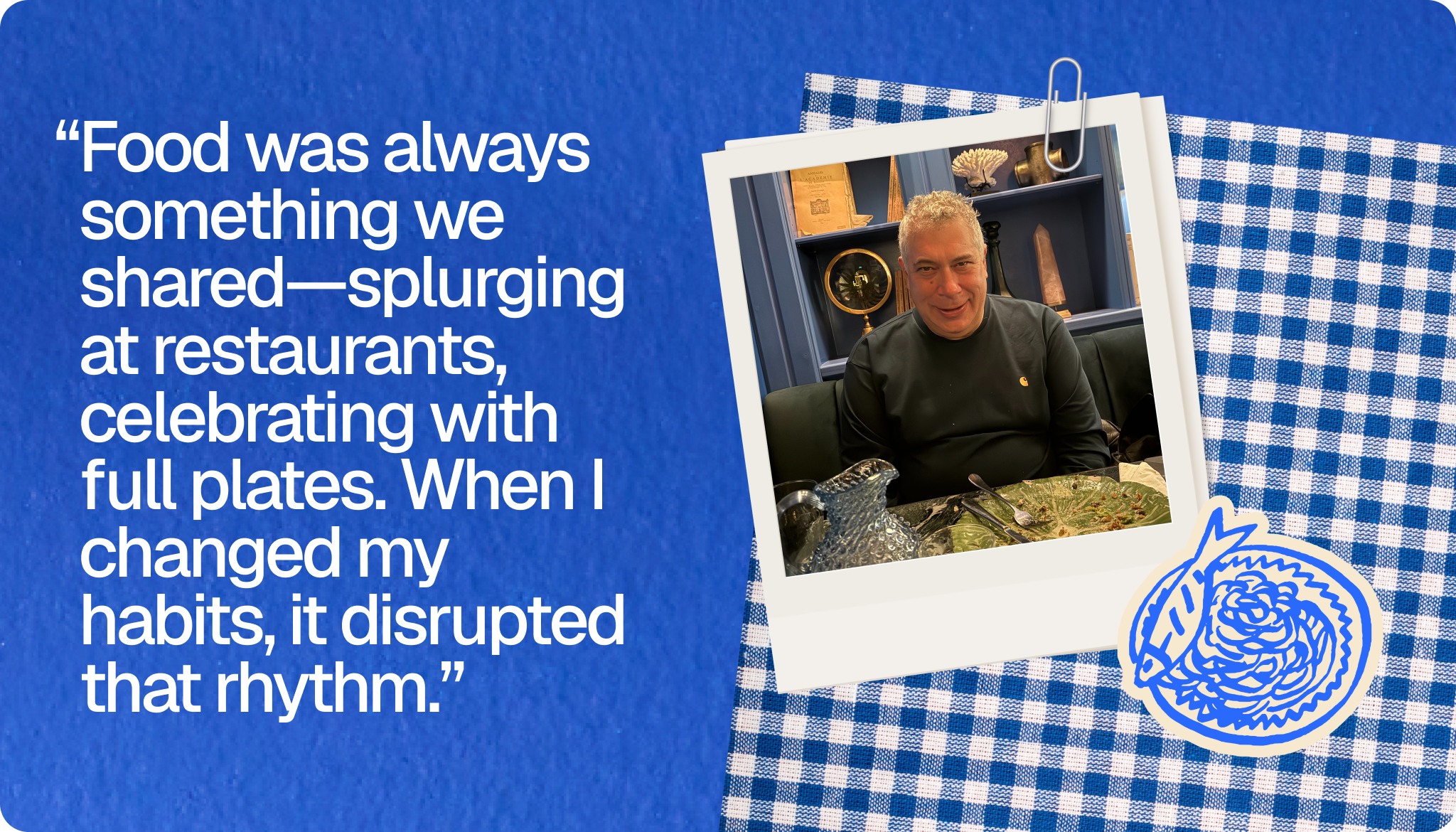
Once Eric started on his GLP-1, dinner started looking very different. On a recent trip to Paris, we skipped steak frites and multi-course meals in favor of wherever he could find a chicken salad on the menu. Eric often comes home from work, fixes himself a high-protein snack of six boiled shrimp with cocktail sauce, and has no appetite for a full dinner afterward. I know I should applaud his new habits. Instead, I sometimes find myself irrationally annoyed.

I’m a Lifetime Member of Weight Watchers, and when I joined 18 years ago, there weren’t any weight-loss medications as powerful (and safe) as GLP-1s. Sticking to smaller portions and resisting second helpings has required me to exercise restraint in a way that Eric has never had to worry about with his medication. His lack of appetite has, to my surprise, made me less consistent with my own healthy habits — because the routines we’d built were thrown off once again.
These days, since it often takes him an hour or more to finish his shrimp snack, we end up eating dinner later than I would like (if he even wants to eat dinner afterward). And while I patiently wait for him to join me in thinking about dinner, I get hungrier and hungrier, and snack more and more. Some nights, I’ll scarf down half a bag of cheese puffs while he savors every last shrimp while watching the news and sipping a martini.
When I see his plate is nearly empty, I ask, “What do you want for dinner?” He responds with, “I don’t know. What do you want?” We go back and forth, neither of us satisfied. Finally, I make myself something simple — scrambled eggs, usually — wondering how I got so off track when I know exactly what works for me. For years, I meal planned and did a big Sunday shop to make sure I could quickly whip up family dinners on weeknights before our Esmé sat down to do her homework. But sometime between when she left the nest and when Eric started his medication, those habits fell by the wayside.
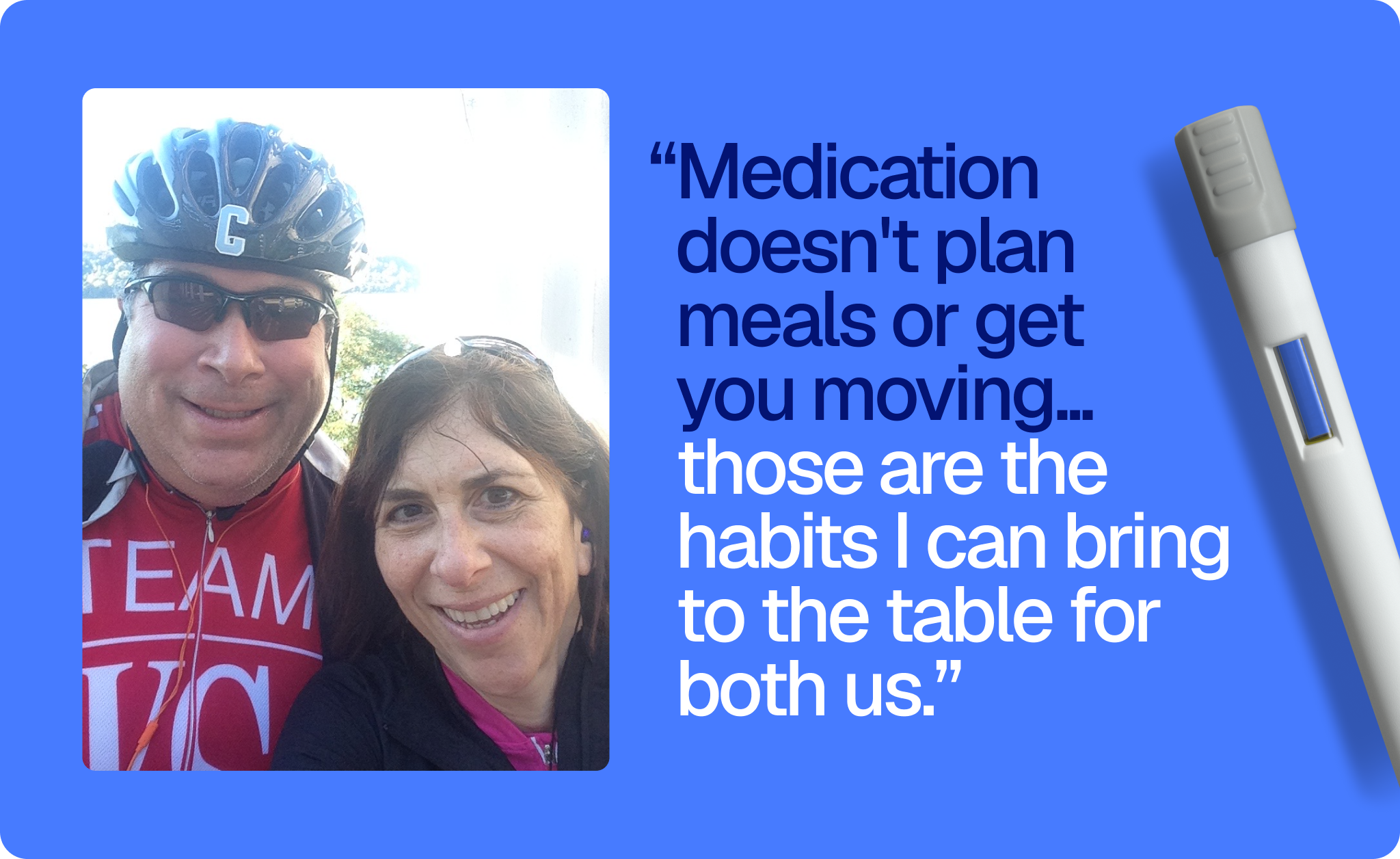
Now, Eric is down more than 60 pounds and his A1C has gone from 9.6 to 5.5. His appetite is smaller, his health is better, and the GLP-1 has clearly played a major role in his progress. But it’s not the whole story. GLP-1s can be a powerful tool. I’ve seen that firsthand. But like any tool, they work best when paired with the others in a good toolbox. For me, that’s nourishing food, regular movement, and habits that can stick long-term. The medication may quiet hunger, but it alone doesn’t build habits. It doesn’t plan meals, create routines, or get you moving. Those are the pieces I learned through Weight Watchers — and the ones I’ve realized I can bring to the table for both of us.
Would things have been different if I’d had access to GLP-1s when I started my weight-loss journey? For sure. But I’m learning now that there’s no right or wrong way to lose weight. There’s only the way that works for you. I’ve also realized that weight loss isn’t a competition, but a way to get and stay healthier for the long-run together.
That’s the chapter Eric and I are trying to write now, because we both envision our future to include lots of travel, one day walking our daughter down the aisle, and keeping up with grandchildren. For both of us, the goal isn’t just weight loss. It’s a life we can both show up for — at the dinner table, and far beyond it.