The benefits of weighing yourself regularly
A daily or weekly date with the scales is a powerful tool on your journey towards weight loss and better health.
Wondering how often you should weigh yourself on WW? There's no one right answer, but we generally recommend that you do so at least once a week but no more than once a day.Why? Doing so can help the pounds fall off.
"A lot of research shows that individuals who weigh themselves weekly - if not more frequently, as much as daily - tend to do better in terms of initial weight loss and in terms of keeping weight off long-term,” says Gareth Dutton, PhD, a professor at the University of Alabama at Birmingham’s School of Medicine.
Case in point: a 12-month study published in 2020 in the journalObesity. Researchers found that people who weighed themselves weekly lost 31.5% more weight than those who did not get on the scale that frequently.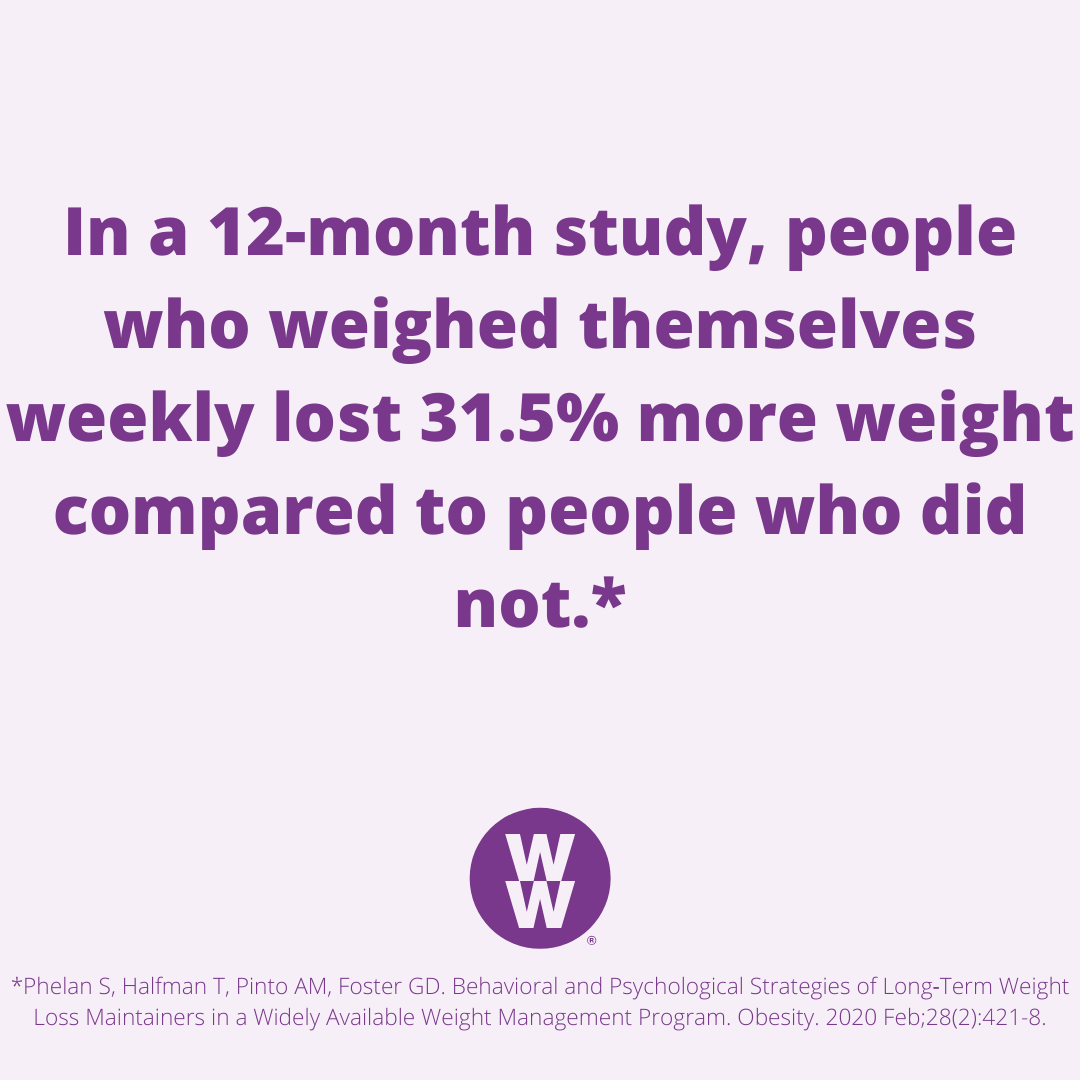
How to weigh yourself on WW
Head to the WW app
With WW, you have multiple options for weighing in weekly (or more frequently). Workshop members can weigh in weekly at their Wellness Check-in, whether at a WW Studio or virtually in a private Zoom chat. And all members can use the WW app to weigh in at home, at the gym, on a staycation...wherever you might be!
Once you track your weight, you'll be asked to reflect on your week. You'll receive a progress report, and set an action plan and goal for the upcoming week. Going through this entire flow helps set you up for weight loss success.
Need a little nudge to step on the scale? We hear you - and we're here for you. The 'Strengthen your body and mind' section of the WW app has a powerful audio coaching that walks you through the process of weighing in to help make it less intimidating. Scroll down the homepage of the app and tap 'NEW! 5-Minute Coaching' to find it and give it a listen.
Need a new scale? Check out these options from the WW Shop.
Create a routine
Now that you know how to track your weight, it helps to create a consistent weigh-in routine - one that allows you to get on the scale at the same time, in the same place, and in the same manner each week.
First, put your scales somewhere where you can easily see them (not kicked under the bathroom cabinet!). Then, choose a time of day and day(s) of the week that you'll weigh yourself, say, Wednesday and Sunday mornings.
Now, choose a consistent way to weigh in. It's recommended that you do so right after you wake up, before eating anything, and without wearing clothes. This ensures that the changes you see on the scale aren't due to the chunky sweater you're wearing or the fluids you drank throughout the day.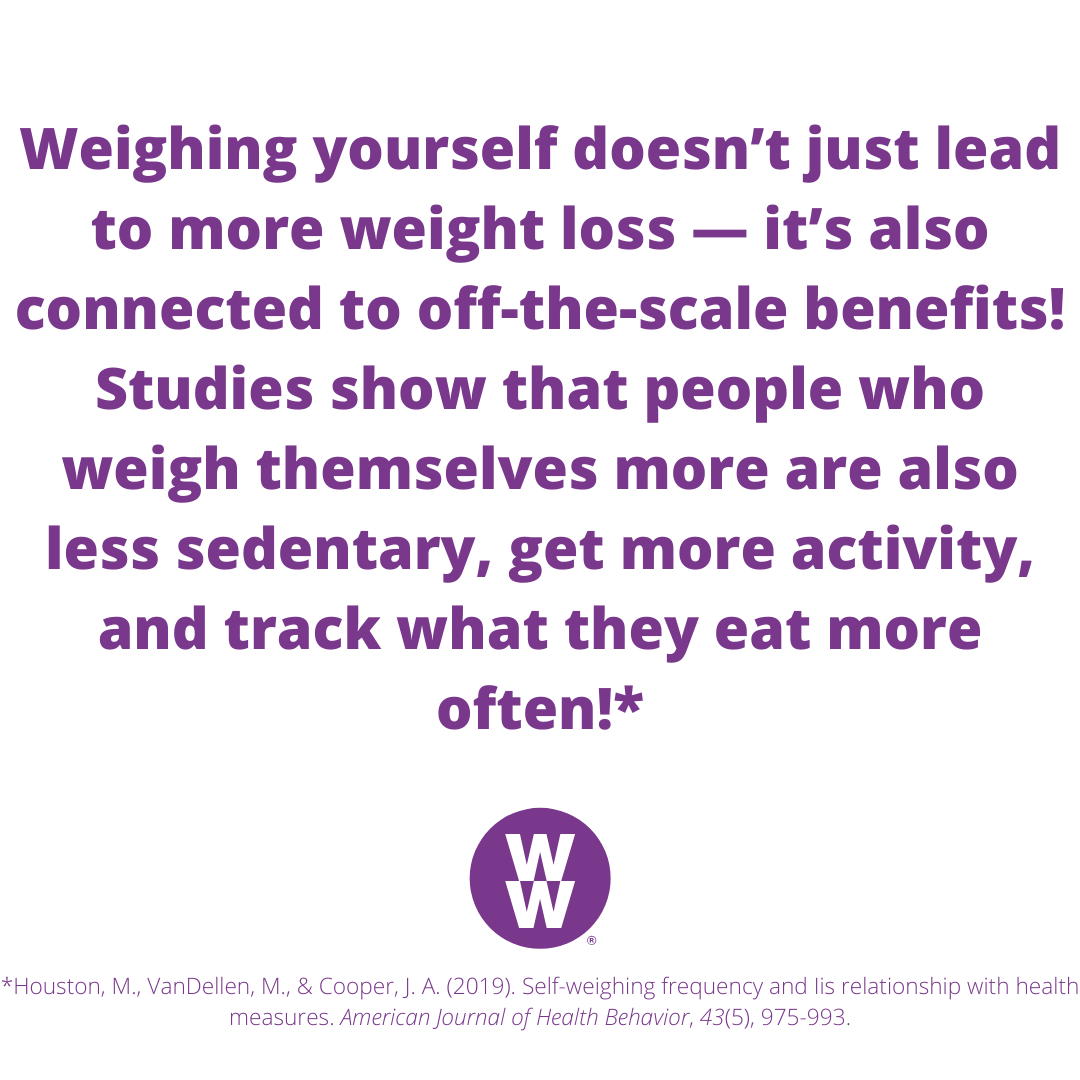
Why you should weigh yourself
1. You’ll notice how behaviours impact your body
“Weighing in regularly can be helpful for adopting healthy behaviours to lose weight because it increases awareness of how the things we eat and the exercises we do impact weight,” says Dori Steinberg, PhD, RD, assistant professor of nursing and global health at Duke University and the associate director of the Duke Global Digital Health Science Center.
2. You’ll stay accountable
It’s much easier to get off track when you don’t have anything to tell you that you’ve actually veered from your goal. Knowing your weight can be empowering! It gives you information about what you might want to do next (change your lunchtime habits, say). It also helps you notice what’s working (meal prepping your lunches so that you don't order a takeaway, for example) so that you can keep doing it.
You’ll become familiar with (and relax around) the normal ups and downs
Here's the thing: weight fluctuates naturally, and when you're trying to lose weight, you may get thrown off by these fluctuations. For many of us, weigh-ins can be anxiety provoking, specifically because we interpret those fluctuations as meaningful, when often they aren't. Regularly getting on the scale can help you become familiar with these patterns.
“There's so much weight given to the number on the scale. We give it so much value, but its value is that it’s just another tool in our tool box,” says Steinberg.
Making the scales a part of your day or week can help alleviate the anxiety you may feel surrounding your weigh-in. It can also help to remove the emotional, judgmental aspects of the process that people so often fear, says Dutton. “It becomes an objective data point rather than a subjective judgment call on you as a person.”