How to create a weight-tracking routine
Behaviour technique

Ever forget to step on the scale? Maybe even on purpose? Don’t love how you feel before, during, or after you weigh yourself? Answer these questions to help you map out a confidence-boosting, progress-fueling action plan.
Try this
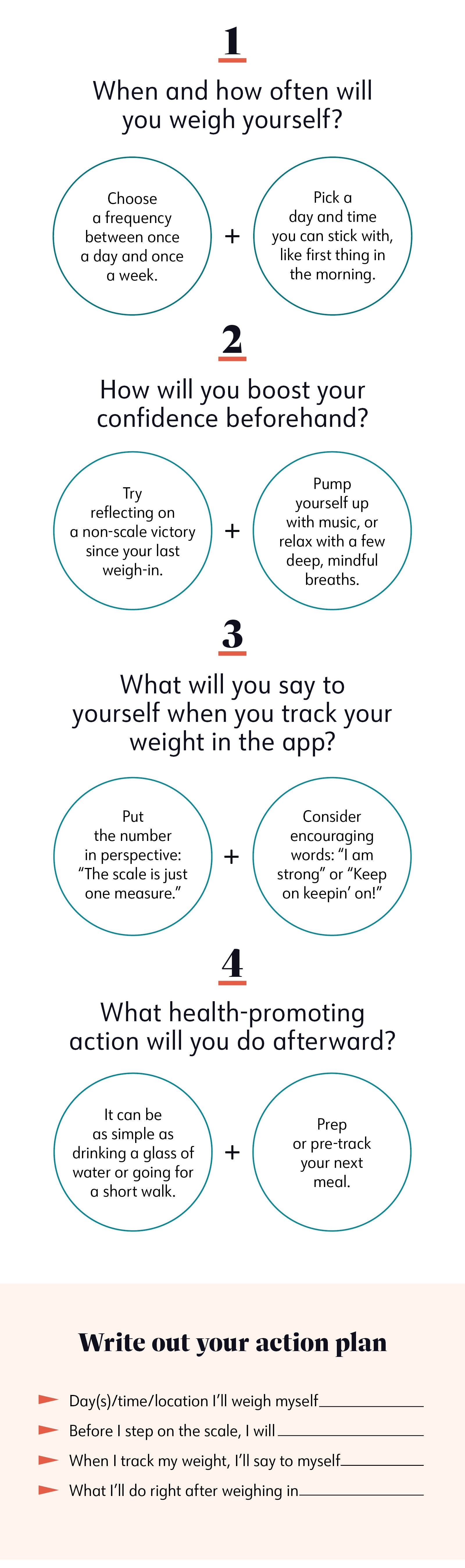
Let’s dive a little deeper…
Even if you want to step on the scale regularly, we get that it’s not always easy. Aside from simply forgetting, you might put it off if you’re nervous the number will go up. Or perhaps you’ve hit a plateau and don’t want to see the same number…again. That’s the ostrich effect—and human nature.
The ostrich effect is the tendency to bury your head in the sand to avoid potentially unpleasant information or feelings
However, creating a routine that addresses the common challenges (and, um, fears) associated with weight tracking can help you stick with it. And that’s key since science tells us that weighing yourself regularly can help you lose more weight and keep it off.
How? Tracking your weight makes you more aware of how your choices and behaviour impact your progress. Doing it frequently takes the pressure off any single day or number, so you can see trends and the big picture, rather than focus on normal and insignificant fluctuations. And those are all things that help you navigate your way to your goals.
3 fast facts
1. Weighing yourself frequently is associated with greater weight loss.
2. Aim to step on the scale between once a day and once a week.
3. Tracking your weight often can take the pressure off any one day or number and help you recognize that fluctuations are normal.