The Most Important Things to Know About Type 2 Diabetes
Type 2 diabetes is complicated — this guide simplifies it. We’re untangling the causes, symptoms, treatments, and more so you can deepen your understanding and take better care of yourself.

Every single year, 1.2 million Americans are diagnosed with diabetes, the vast majority of which are type 2. That means 1.2 million Americans have to suddenly learn about glucose, insulin, how to eat if you have diabetes, and more. Making things worse: all of the myths swirling around about the condition and the stigma that can accompany the diagnosis.
This guide serves to make it all feel more manageable. Find out what type 2 diabetes really is, ways to manage and reduce complications, and how WeightWatchers can help make things feel easier along the way.
What is type 2 diabetes?
Affecting more than 38 million people in the United States, type 2 diabetes results from a mismatch between the body’s increased demand for insulin and the pancreas’s reduced ability to meet that demand. Insulin is a hormone released by the pancreas that’s essential for moving glucose (sugar) from the bloodstream to cells throughout the body, where it’s used for energy.
In type 2 diabetes, however, the body requires more and more insulin to get glucose out of the blood. The pancreas can’t keep up with the rising demand. The result: high blood sugar. Over time, that can lead to a variety of complications, including nerve damage and kidney disease.
What causes type 2 diabetes?
There isn’t a single diabetes cause, or trigger that makes someone develop insulin resistance. But there are a number of factors that can raise someone’s risk:
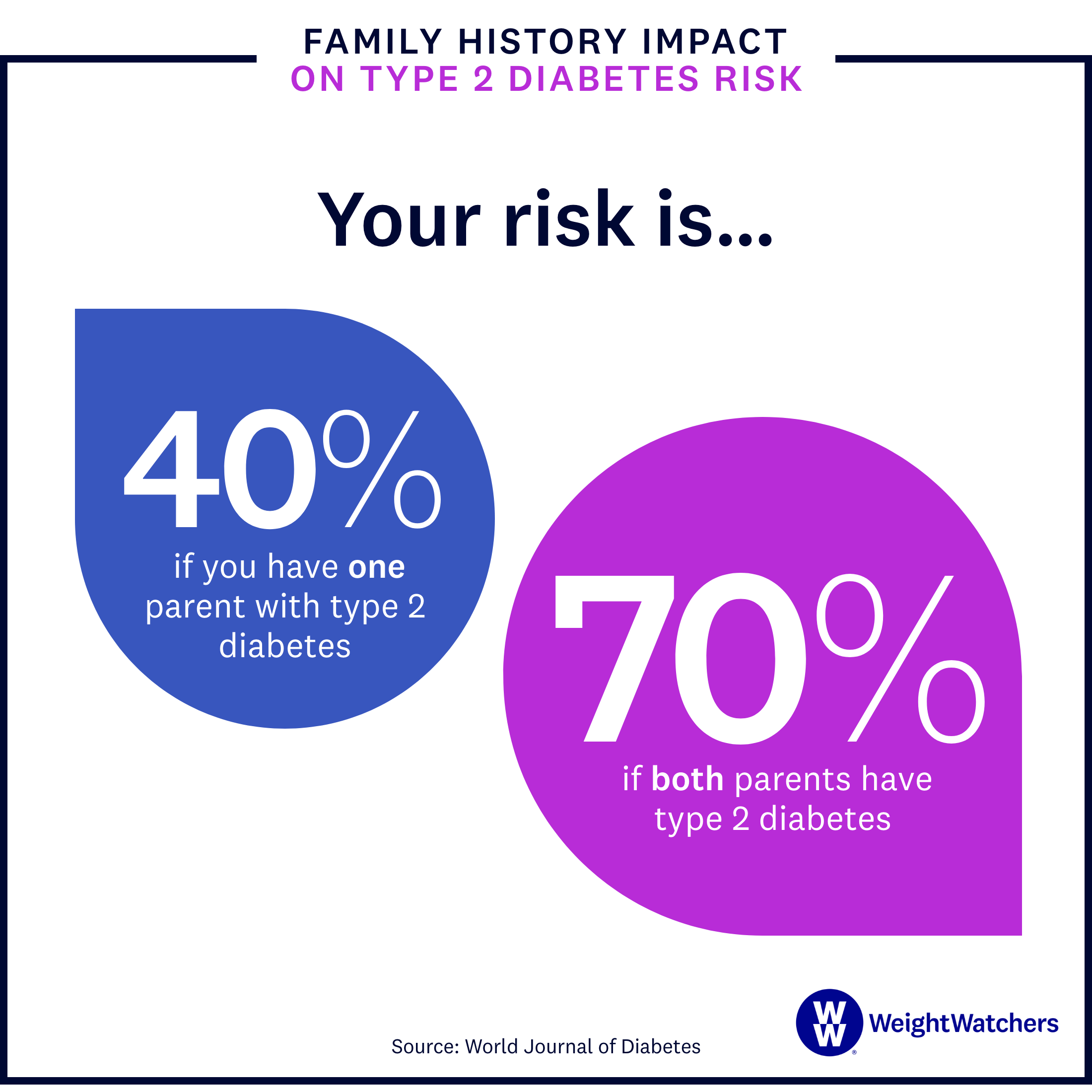
Genetics: People can be born with a predisposition to insulin resistance and impaired insulin production — and therefore type 2 diabetes. The condition is more likely to occur in those who have a family history of it, says Dr. Jane Reusch, M.D., a professor of medicine and the associate director of the Center of Women’s Health Research at the University of Colorado.
Weight: Obesity is linked to 30% to 53% of new type 2 diabetes cases every year in the U.S. Having overweight or obesity can make it harder for glucose to get into cells — known as insulin resistance. A type of body fat known as visceral fat, which surrounds internal organs and causes inflammation throughout your body, also raises the risk of insulin resistance.
Inactivity: When you’re physically active, your body is more sensitive to insulin, meaning it moves glucose of the blood more efficiently. Also, having more muscle mass helps your cells take in more glucose for energy. Being inactive — defined as not doing anything physical during leisure time for the past month — means you’re missing out on those benefits, which raises your risk of insulin resistance.
Age: The majority of people who are diagnosed with type 2 diabetes are over the age of 45. This is likely because we make less insulin as we age and tend to lose muscle mass and gain fat, says Reusch. “These are two of the critical components that impact insulin resistance and risk for developing type 2 diabetes.”
Sex: Men are more likely to get type 2 diabetes than women (12.6% of men in the U.S. have it while 10.2% of women do). This is likely because as men get older, they carry more fat in their bellies — typically visceral fat — which is a risk factor.
Socioeconomic status: Diabetes has been shown to disproportionately affect those in low-income populations, a trend tied to disparities in things like access to healthcare, healthy food, and spaces to exercise safely.
Race: The disparities that apply to socioeconomic status also apply to marginalized racial and ethnic communities, including African Americans, Alaska Natives, American Indians, Asian Americans, Hispanics and Latinx, Native Hawaiians, and Pacific Islanders. The risk of type 2 diabetes is higher for these individuals due to factors like decreased access to healthcare and higher levels of stress.
Type 2 diabetes symptoms
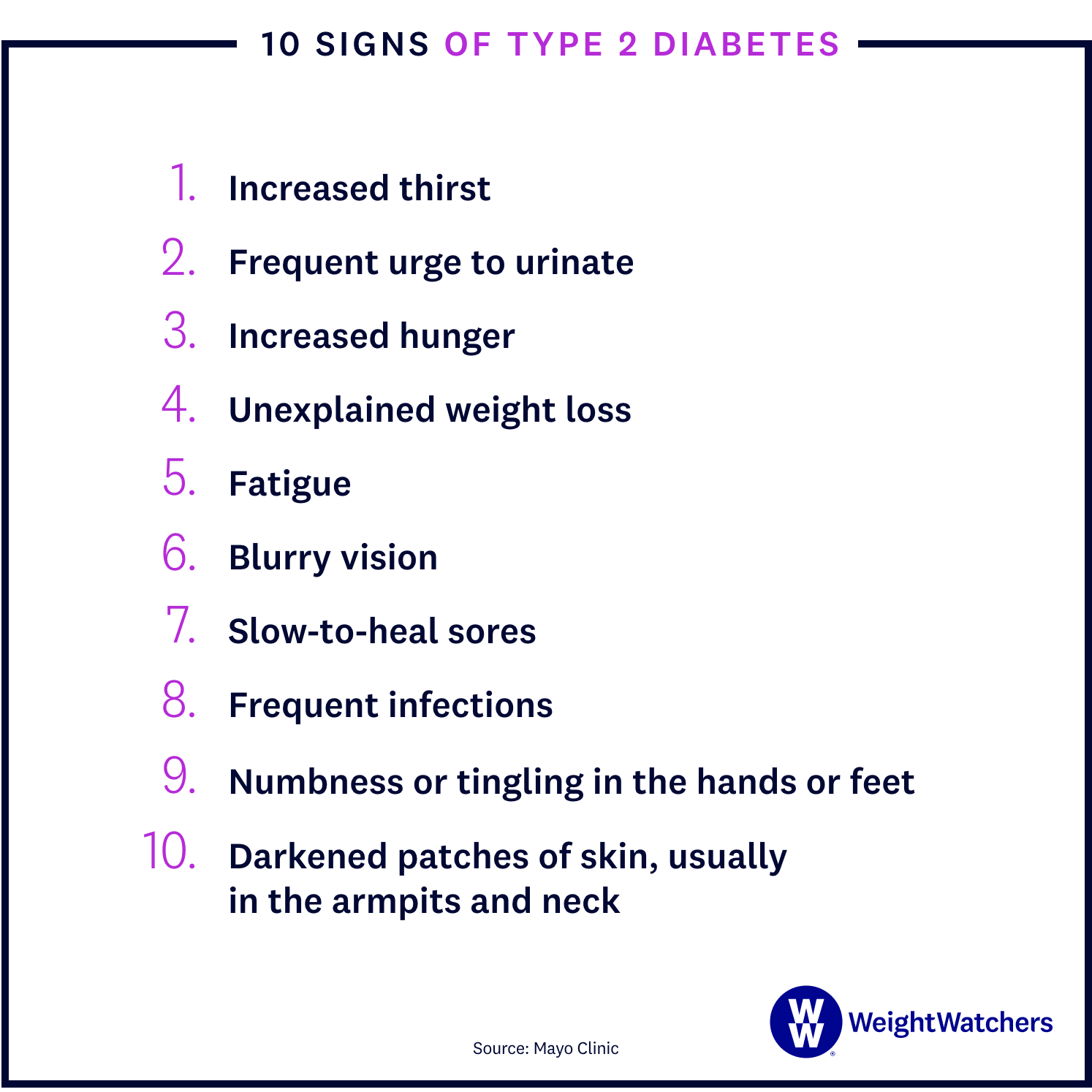
Type 2 diabetes often develops slowly, meaning you can be living with it for years and not know (a big reason why it’s undiagnosed in 22% of people with the disease). As it progresses, it can start to show the following signs and symptoms:
Increased thirst
Needing to urinate more frequently
Increased hunger
Unexplained weight loss
Fatigue
Blurry vision
Sores that heal slowly
Frequent infections
Feeling numbness or tingling in the hands or feet
Developing areas of darkened skin, usually in the armpits and neck
How is type 2 diabetes diagnosed?
To be officially diagnosed with type 2 diabetes, your doctor will perform one of several tests that measure blood sugar levels.
Hemoglobin A1C test: This blood test indicates your average blood sugar level for the last two to three months. A reading of 6.5% or higher indicates diabetes.
Random blood sugar test: If you ever have your blood sugar taken and it’s 200 mg/dl or higher (and you have symptoms), you can be diagnosed with diabetes.
Fasting blood sugar test: If your blood sugar is 126 mg/dl or higher after an overnight fast on two separate tests, you’ll be diagnosed as having type 2 diabetes.
Oral glucose tolerance test: After ingesting 75 g of glucose, your blood glucose is checked two hours later. If it’s higher than 200 mg/dl, then a diagnosis of diabetes may be given.
4 complications of type 2 diabetes
Over time, high blood sugar can affect many of your major organs, including your heart and kidneys, as well as nerves and blood vessels. This puts people with type 2 diabetes at higher risk of certain issues.
Cardiovascular disease hits people with diabetes hard: They are twice as likely to have heart disease or stroke than someone without diabetes. Over time, high blood sugar can damage blood vessels and the nerves that control your heart. People with diabetes are also prone to high blood pressure, high LDL cholesterol, and high triglycerides — all of which increase the risk of heart disease.
Eye damage (retinopathy) is common since high blood sugar can damage the blood vessels of the retina, cutting off the blood supply. Retinopathy is responsible for 10,000 new cases of blindness every year in the U.S. Type 2 diabetes can also lead to other serious eye diseases, such as cataracts and glaucoma.
Nerve damage in limbs (neuropathy) happens when prolonged high blood sugar damages or completely destroys nerves, resulting in tingling, numbness, burning, pain, or total loss of feelings in the toes and fingers.
Kidney damage (nephropathy) occurs when the excess glucose damages the blood vessels that filter waste in the kidneys. Diabetes can lead to chronic kidney disease or irreversible end-stage kidney disease, which often requires dialysis or a kidney transplant.
How is type 2 diabetes treated?
Your doctor will work with you to create a tailored diabetes treatment plan, which may include oral or injectable medications to help the body use insulin more effectively or increase insulin production. If your blood sugar is still difficult to control with the those medications, your doctor may also suggest insulin therapy, which involves injecting insulin at specific points during the day.
Tell Me More About...Diabetes Medications
Q: Does everyone with type 2 diabetes need to take medication?
A: “No they don’t — you can control type 2 diabetes with weight loss,” says David Marrero, Ph.D., director of the Diabetes Translational Research Center at Indiana University and former President, Health Care and Education of the American Diabetes Association. “But I don’t want to give false hope: You have to be willing to make pretty significant lifestyle changes with diet and exercise to lose enough weight that you can completely avoid medication.”
Q: What should you say to your doctor if you want to try losing weight first?
A: “Sustained high glucose can cause a bunch of problems, so many doctors will pull the trigger and start you on medication right away,” says Marrero. “But it’s not unreasonable to tell your doctor that you want to try to lose a certain amount of weight and come back and be tested again before starting medication. If you do lose weight and still aren’t controlling glucose adequately, your doctor can always start you on medication then.”
Q: If you start medication, can you go off it by losing weight down the road?
A: “Yes, you can, but it depends on what your body is doing and how well it’s dealing with glucose,” says Marrero. “Even if you don’t stop all medication, you can still improve your diabetes. There are people who start at one dose and reduce it significantly because they’ve lost weight.”
The lifestyle component
Medications can be helpful, but lifestyle modifications are also key. “ Nutrition and physical activity are central to the management of type 2 diabetes,” Reusch says. This means:
Moving more: Physical activity helps control blood sugar and weight while improving blood pressure and cholesterol — reducing your risk for heart disease down the road. And you don’t need to hit the gym hard either. A 30-minute daily walk can bring down glucose levels.
Eating a healthy diet: The food you eat is especially important, since it has a direct impact on how often your blood sugar spikes. For example, eating more lean protein and fiber and fewer refined carbohydrates, including added sugars, makes it easier to manage glucose.
Losing a significant amount of weight and keeping it off through healthy habits can even help type 2 diabetes go into remission, which is when glucose levels return to nondiabetic ranges and stay there for at least six months, with no diabetes medications.
There’s no one-size-fits all eating plan for those with diabetes. That’s why the WeightWatchers Diabetes Program offers a personalized approach. You’re able to still eat the foods you love, but get help prioritizing foods that won’t raise your blood sugar. And it’s proven to work: After six months, members experience an average 5.7% weight loss and 0.75% reduction in their A1C.*
The bottom line
Type 2 diabetes is caused by insulin resistance, which is when your body can’t use its insulin efficiently to move glucose out of your blood. This elevated blood sugar can lead to complications like heart disease, eye issues, kidney disease, and more. Often type 2 diabetes doesn’t have any symptoms at first, but a routine blood test can screen for the disease. To live well with type 2 diabetes, your doctor will recommend a combination of lifestyle changes, like moving more and eating well, and possibly medication.