A new way to respond to setbacks
Behaviour technique

Everyone faces setbacks—they’re totally normal! Also normal: Being tough on yourself afterwards. But science says there’s a better way to get back on track.
Try this!
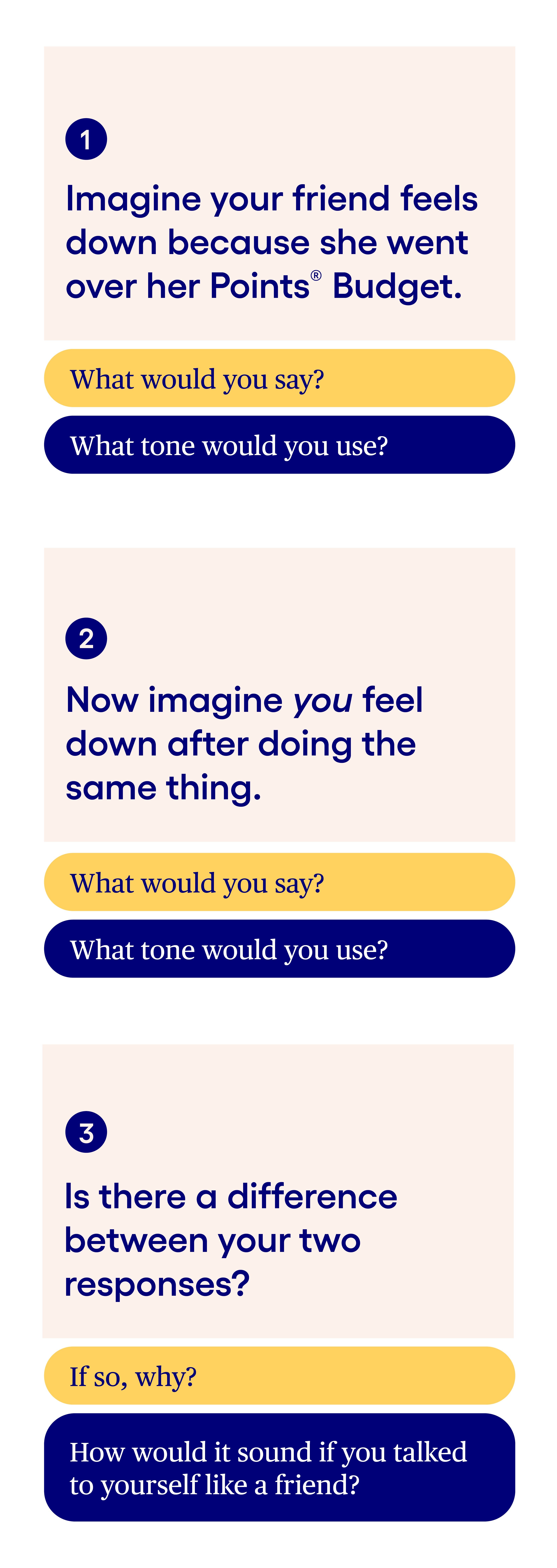
Let’s dive a little deeper…
Would you ever lecture a friend who veered off-track about what they should have done or point out every wrong choice? Probably not. We tend to be our pals’ biggest cheerleaders and kindest confidants—all while being our own worst critics when we’re the ones making mistakes.
But the truth is, responding to your slip-ups with judgement and criticism makes you less likely to reach your goals. Research suggests it’s compassion and acceptance—and treating yourself like you would a friend—that are associated with healthy behaviours, overcoming obstacles, and getting back on track. Not tough love.
How you think about and talk to yourself is key to moving forward. But the shift toward self-compassion may not happen overnight. It can take practice to flex those muscles. Start by focusing on how you talk to yourself (and others) so you can make changes.
3 fast facts
Research shows that tough love makes us less likely to reach our goals.
Consistently replacing self-critical thoughts with self-compassionate thoughts helps us naturally treat ourselves more kindly.
Approaching challenges with kindness has actually been shown to increase our motivation to keep going.