How to make tricky food decisions on the fly
Behaviour technique

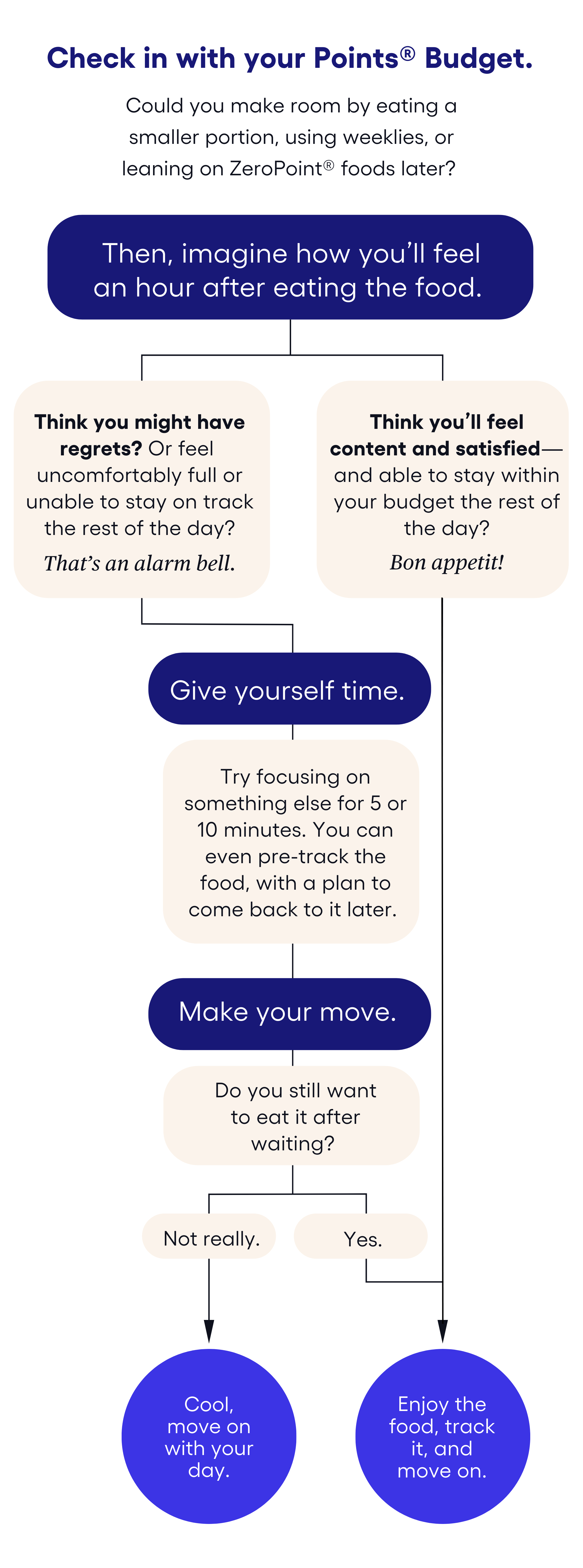
Next time you suddenly find yourself face to face with a food you love but didn’t plan for, use these steps to switch off autopilot and decide what to do.
Try this!
Let’s dive a little deeper…
Maybe a friend surprises you with her famous dessert. Or, you’re out to eat and your sister orders your favourite appetiser to share—the one you were going to skip in favour of a cocktail. Even if you plan ahead and budget Points like an all-star, you can’t anticipate every food or drink that pops on your radar and throws you and your plans in a spin.
But you can anticipate how you’ll react. It’s normal to just automatically reach for tasty foods when they’re in front of you. But pausing to mindfully check in with yourself (and Future You) gives you a chance to more consciously choose how you’ll react. Putting extra time and distance between you and the food helps, too.
In the end, you may still decide to eat the food—that’s more than OK. The goal isn’t to cut out your favourites (we all know that doesn’t work). It’s to notice the desire to eat, break that automatic see-it-eat-it reflex, and instead make a more informed decision. That alone is a win and can help you stay on track for the long haul.