Portion tips and nutrition guidelines
Get the basics on how to measure and estimate portions with this handy guide.

WeightWatchers' 5 simple portion tips
1. Downsize your plates
Using smaller plates leads to serving and eating around 20 per cent fewer kilojoules (calories). And, because that serve of food will look bigger on a smaller plate, you won’t notice or feel like you’re eating any less.
2. Be aware of bulk buys
Research shows that we significantly overestimate the size of a single portion when we eat straight out of large packages and containers of food. If you prefer to bulk buy non-perishable foods, divide and store them in smaller containers to fight the effect.
3. Use your handy tools
A University of Sydney study proves that using ‘hand-based’ methods to help visualise portions of food is both effective and accurate. For instance, a fist is about the size of one cup. Your palm? It’s about the size of a single serve of meat or poultry. For more ‘handy portion tools’, see our portion size hacks.
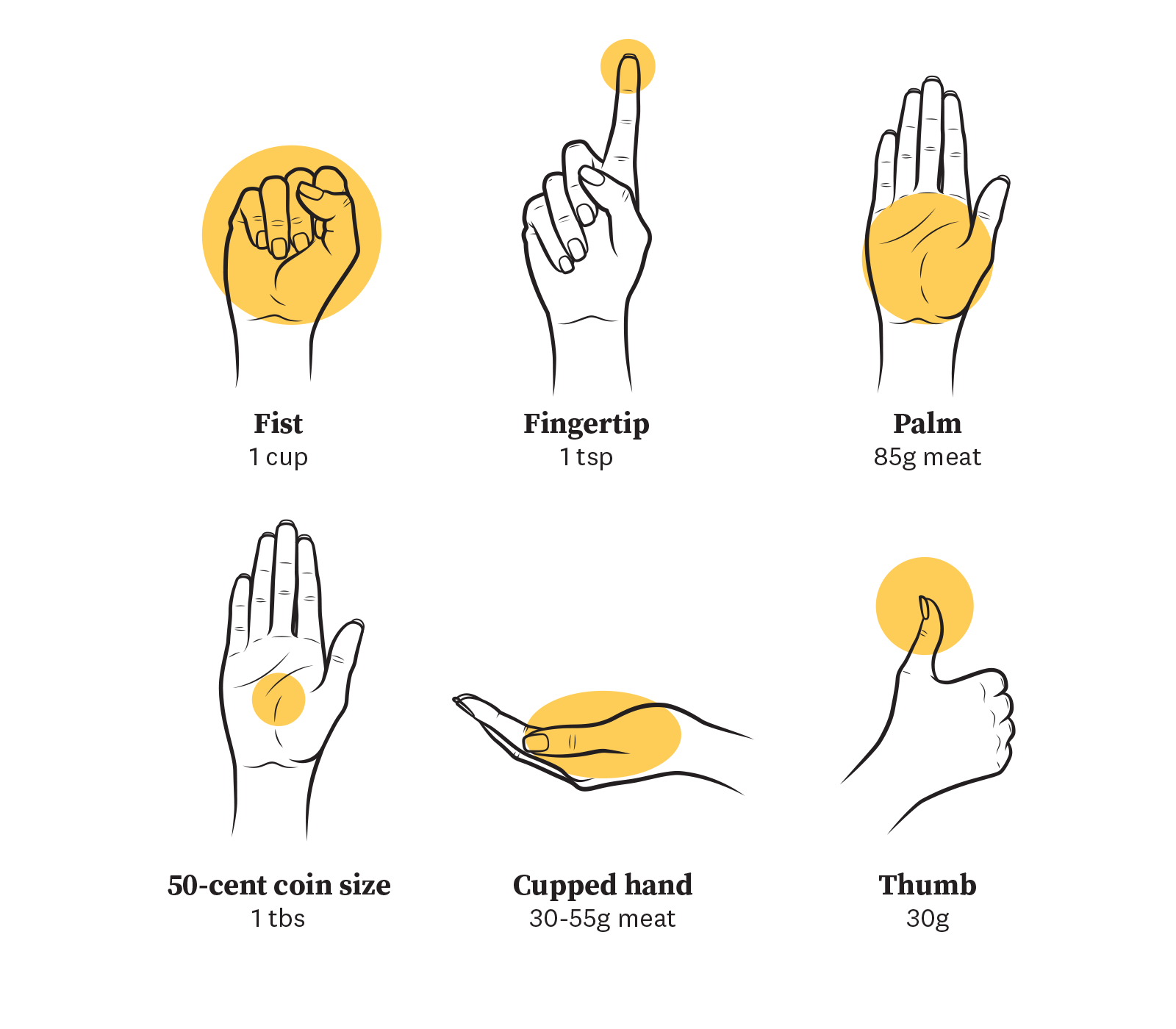
Your fist is about the same size as 1 cup of fruit or pasta.
Your thumb (tip to base) is the size of 30g of meat or cheese.
Your palm (minus fingers) equals 85g of meat, fish, or poultry.
Your cupped hand equals 30-55g of nuts or pretzels.
4. Practise being a package sleuth
When purchasing any packaged food, ensure to check the nutrition information panel for the actual serving size. Often, a packet or a bottle can contain more than one serving, and sometimes more than two, even though the size of the packaging looks like it’s designed to be a ‘single serve’. You can also simply scan a product to find its information using the barcode scanner on your app.
5. Get creative with colours
It also pays to ‘match’ the colour of your plates and the food you’re serving on them, carefully. Researchers at Cornell University’s Food and Brand Lab, in the US, found that people serve themselves 30% more food when the plate they’re using offers low contrast with the food in question – for example, serving white rice on a white plate. Try to choose plates that have a contrasting colour to the food you’re serving.
Guide to nutrition
The Australian Dietary Guidelines recommend eating a variety of nutritious foods from the following five food groups every day, to maintain your health and wellbeing.
1. Dairy
Each day you need 2.5 serves of reduced-fat dairy (breastfeeding mums also need 2.5, with 3.5 for teenagers and men over 70, and 4 for women over 50). What's a serve?
1 cup (250ml) skim, no-fat or low-fat dairy or soy milk
½ cup (125ml) low-fat evaporated milk
¾ cup (200g) low-fat natural yoghurt
2 slices (40g) reduced-fat hard cheese
½ cup (120g) low-fat or reduced-fat ricotta or cottage cheese
2. Fruit
Each day you need 2 serves of fruit. What's a serve?
2 small pieces of fruit (such as plums, apricots, mandarins or kiwifruit)
1 medium-sized piece of fruit (such as an apple, banana, orange or pear)
1 small bunch of grapes
1 cup chopped fresh fruit salad
1 cup canned fruit (no added sugar)
3. Vegetables
Each day you need at least 5 serves of vegetables. What's a serve?
½ cup cooked vegetables
1 small (or half a medium) potato
1 cup raw salad vegetables
½ cup (85g) cooked dried or canned beans or lentils
4. Cereals & grains
Each day you need 3-6 serves of cereals/grains (preferably wholegrains). What's a serve?
1 slice (40g) wholemeal or wholegrain bread
½ medium (40g) wholemeal or wholegrain bread roll
½ cup (75–120g) cooked rice, pasta, noodles, barley, quinoa or polenta
½ cup (120g) cooked porridge
⅔ cup (30g) wheat cereal flakes
¼ cup (30g) natural (untoasted) muesli
5. Lean protein
Each day you need 2-3 serves of lean protein. What's a serve?
65g cooked lean beef, lamb, veal or pork (90–100g raw)
80g cooked lean poultry (100g raw)
100g cooked fish fillet (115g raw) or one small can of fish
2 large eggs
170g tofu
30g nuts, seeds or peanut/almond butter
1 cup cooked legumes (such as lentils, chickpeas or cannellini beans)
Stay hydrated
Aim to drink 1.75 litres (7 cups) of water a day as it helps you stay hydrated and can also help you feel full.
If you drink alcohol, try to stick to no more than 2 standard alcoholic drinks a day and aim for at least two alcohol-free days a week.