How to fit in fitness—even if you’ve only got a few minutes
Behaviour technique
An ideal activity routine helps you feel less tense. So when your schedule fills up or your energy takes a dip, don’t stress about missing your usual workout. Take a breath and broaden your definition of what it means to be active.
Try this!
Let’s dive a little deeper...
If you’ve established a regular activity routine, you’ve probably worked hard to make it a habit. First, well done! Second, it’s perfectly normal to feel frustrated when life gets in the way—whether it’s a mountain of tasks or an unexpected interruption. Or maybe some days you just can’t muster the mental or physical energy. Whatever’s stopping you, it’s not just an excuse—it’s life, and that’s OK.
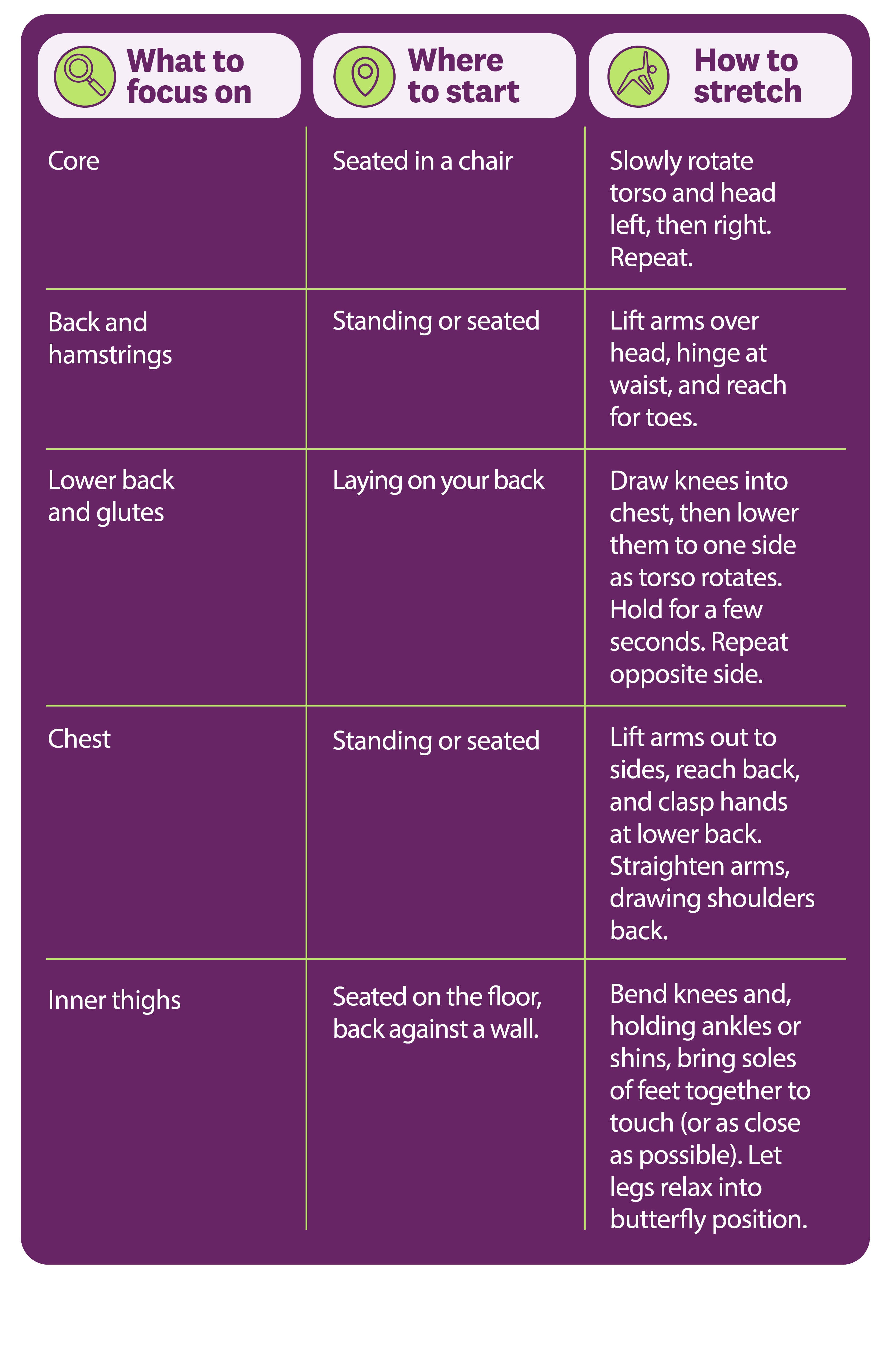
What you can do: Get flexible—both literally and figuratively. Stretching makes an ideal plan B, C, or D because it still gets you moving, often takes less time and equipment, and requires less motivation when life interrupts your primary activity plan. Not only does stretching increase flexibility and feel good, but research shows it can make daily activities easier and reduce the risk of injury. (You know, when you’re reaching for an object one minute and grabbing an ice pack the next.) Like your regular workout, it can reduce stress, boost your mood, and might even help stretch your budget.
Meanwhile, being flexible with your routine—resisting an all-or-nothing approach to movement—can help you stay consistent on your weight-loss journey. You might even enjoy stretching so much that you add it to your day even when you do have time for your usual activity.
If you’re injured, check with your healthcare provider or physiotherapist first to determine what’s safe to do.